Dog Rubber Toys: Material Science for Aggressive Chewers
By Sanjay Bhatt • 2nd May
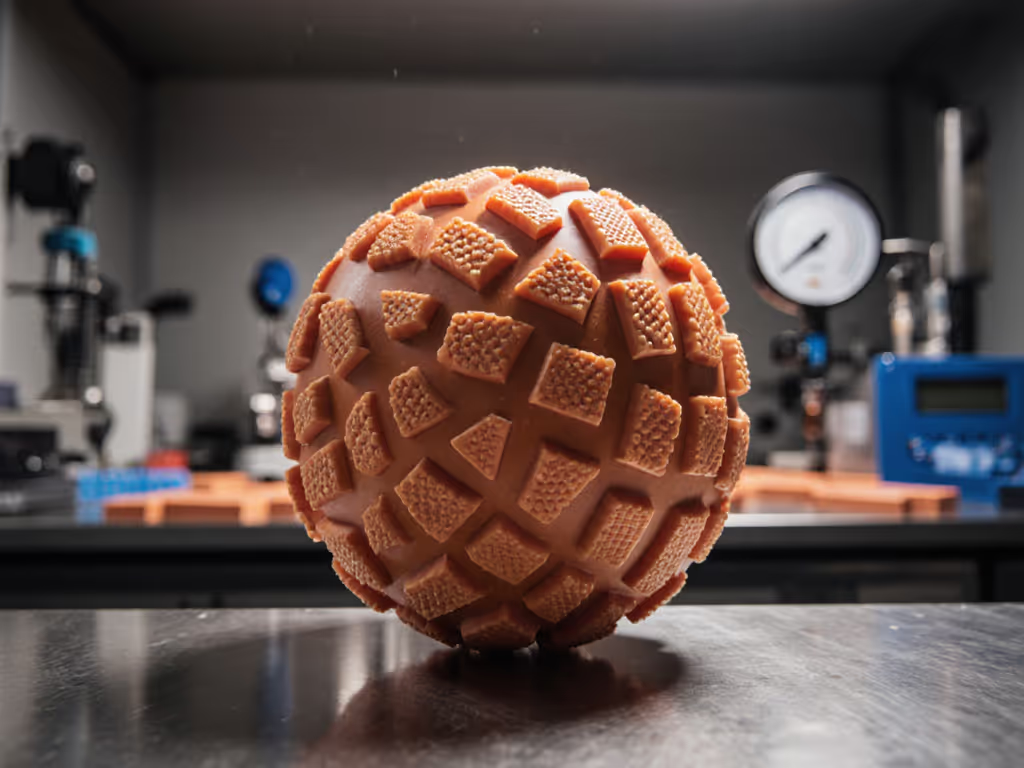
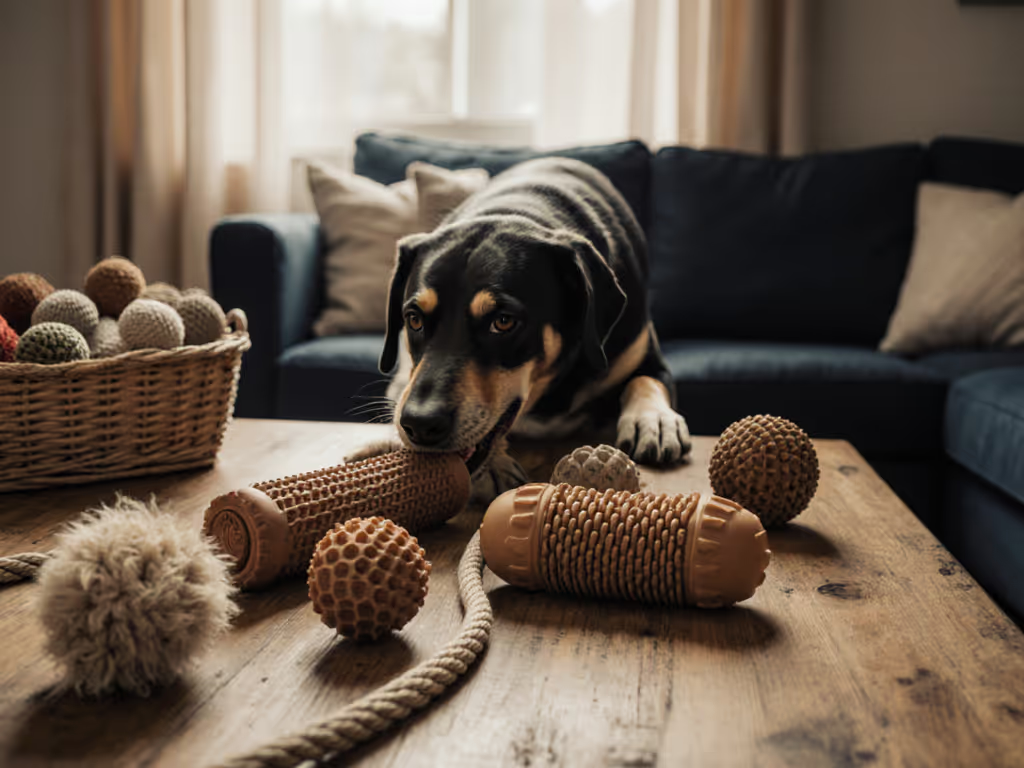
When I chart bite patterns and inspect seams across kennel rounds before sunrise, one principle emerges consistently: dog rubber toys built from carefully formulated materials and tested under stress outperform generically labeled "chew toys" by orders of magnitude. Understanding material properties for aggressive chewers (how rubber is vulcanized, what durometer rating means, and why construction architecture matters) translates directly into safer enrichment decisions. This is not marketing; this is material science grounded in failure mode analysis and real-world testing across high-arousal environments.
This guide examines the chemistry, construction, and risk assessment behind rubber toys designed to survive powerful jaws. If it survives stress and stays engaging, it's worth your trust.
What Makes Rubber the Ideal Material Class for Aggressive Chewers?
Rubber occupies a unique position in the material class spectrum because it combines elasticity, durability, and safety simultaneously, properties other materials struggle to deliver.
When a powerful jaw exerts pressure on a rubber toy, the material deforms rather than fractures. This distinction separates rubber from rigid alternatives: nylon and rawhide resist force until they suddenly fail, creating sharp fragments. Rubber yields under pressure, absorbing load through its polymer chain structure, then springs back. This resilience prevents tooth fractures while still challenging strong jaws.
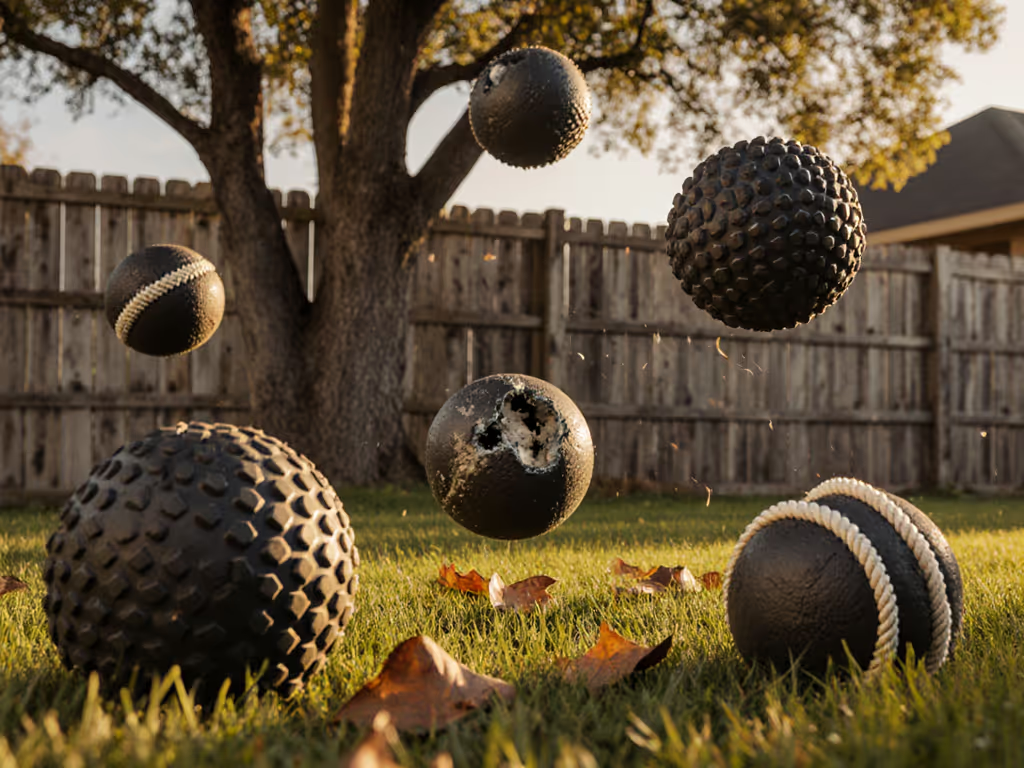
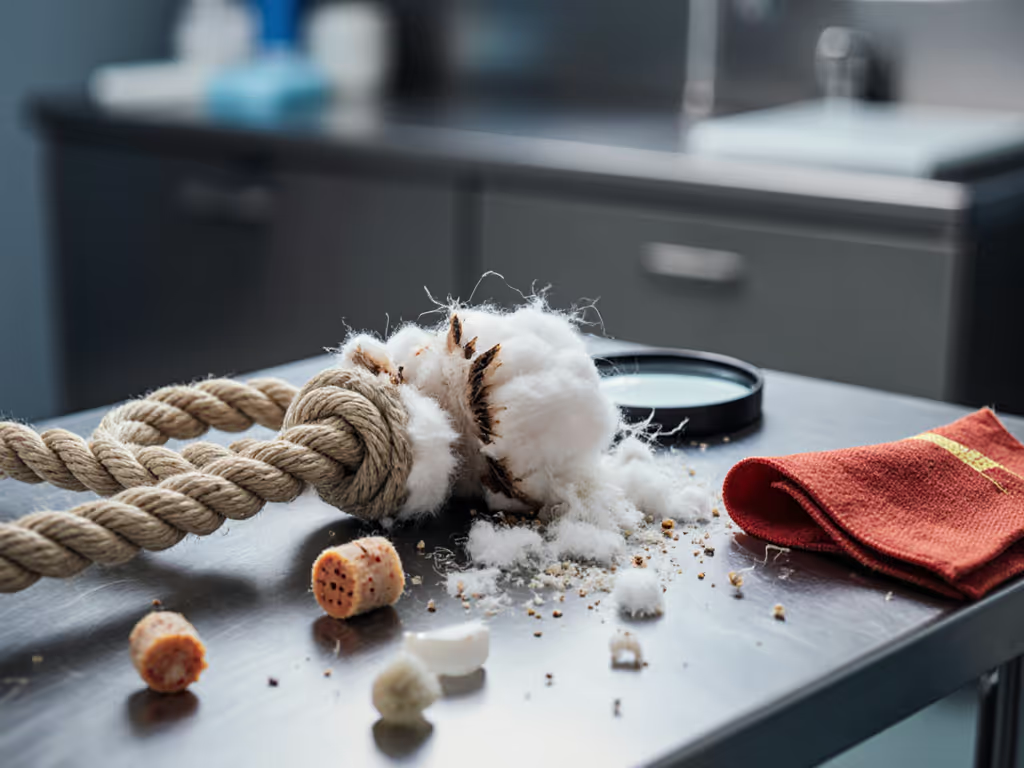
From a failure mode perspective, quality rubber toys degrade predictably. They wear smooth at contact points, thin through micro-tearing, then fragment into soft, flexible pieces rather than jagged shards. A dog may eventually reduce a rubber toy to fragments, but those fragments are safer to swallow than splinters from rigid materials.
Rubber is also inherently non-toxic. Genuine rubber doesn't require phthalates or flame retardants to achieve the right texture (an advantage synthetic plastics cannot claim). High-quality formulations use FDA food-grade components, reducing systemic risk if a dog incidentally ingests small shavings.
How Do Natural Rubber, TPR, and Silicone Compare?
Three rubber material options dominate the market, each with distinct risk profiles for heavy chewers.
Natural Rubber: The Gold Standard
Natural rubber, harvested from rubber tree latex and vulcanized, becomes extremely durable while remaining flexible. Vulcanization cross-links polymer chains, creating a stable material that deforms and recovers repeatedly without molecular breakdown. High-quality natural rubber can withstand continuous chewing without cracking or leaching chemicals. For a brand-level durability breakdown of premium natural rubber, see our Kong vs West Paw durability test.
From a safety standpoint, natural rubber scores highest: it's an inert, plant-based material proven over decades in animal applications. Genuine natural rubber is BPA-free and phthalate-free by default. If a dog ingests small pieces, natural rubber's flexibility reduces blockage risk compared to rigid synthetics. It is also renewable and biodegradable over time.
Thermoplastic Rubber (TPR): High Durability, Complex Trade-offs
High-grade TPR formulations can be as durable or tougher than natural rubber, especially with proprietary blends engineered for extreme durability. TPR offers manufacturing flexibility: it resists UV degradation, floats in water for fetch play, and recycles without losing integrity.
However, not all TPR carries equal safety margins. Low-grade TPR may contain fillers or processing residues that don't match natural rubber's safety profile. In high-arousal environments, TPR toys occasionally show stickiness after heavy saliva exposure or unpredictable micro-tearing patterns. For dogs in the highest arousal band, carefully formulated natural rubber remains the safer choice.
Silicone: Stable but Not Tough
Silicone is inert and weather-stable (useful for outdoor toys) but lacks tear resistance against aggressive chewing. Aggressive chewers can puncture silicone toys, creating sharp edges or swallowable chunks. Silicone is also expensive and difficult to recycle, making it impractical for serious power-chewer applications.
What Is Vulcanization, and Why Does It Drive Durability?
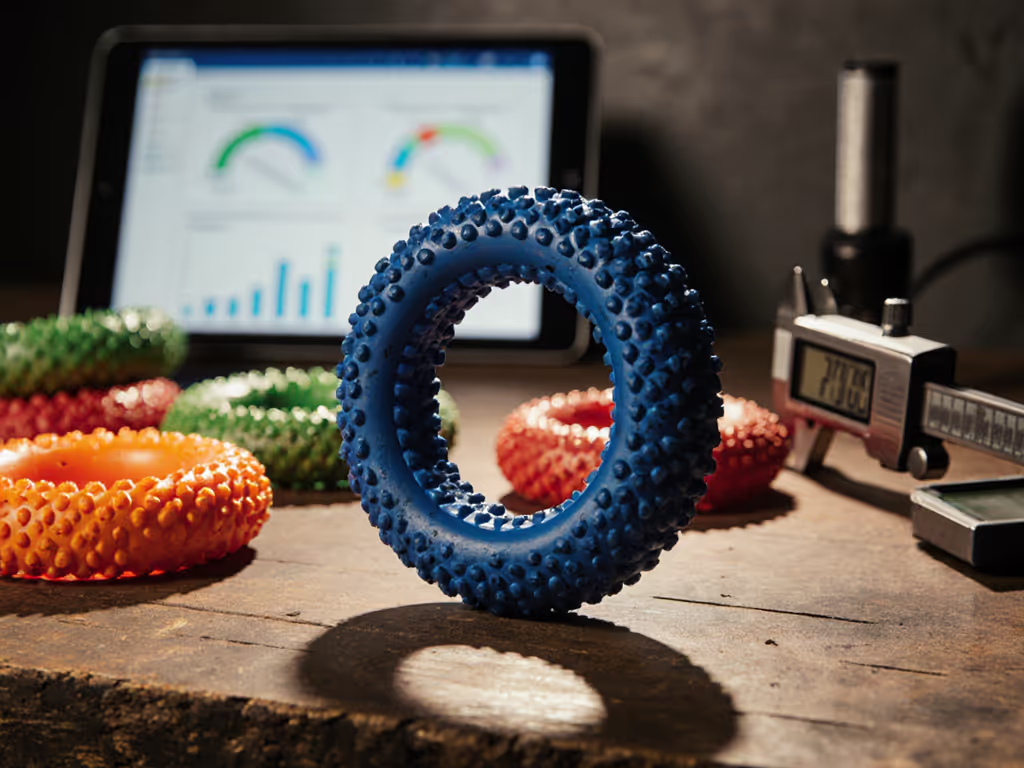
Vulcanization is the chemical cross-linking process that transforms raw rubber into a stable, durable material. Sulfur or peroxide compounds initiate molecular bridges between rubber polymer chains. The degree of cross-linking, measured in durometer (Shore scale hardness), determines how much force a toy can absorb before yielding.
For aggressive chewers, rubber density testing matters directly. A high-durometer toy (Shore A 60-80) resists puncture and deep tearing. A low-durometer toy (Shore A 30-50) is softer and more playful but less durable against relentless chewing. Quality manufacturers publish durometer ratings or conduct third-party testing. Learn how to verify those claims and spot red flags with our guide to dog toy safety certifications. If a brand doesn't specify material hardness, it's a red flag, because they haven't characterized their product's core performance properties.
How Do You Identify Quality Rubber and Predict Failure Patterns?
Genuine Natural Rubber Signals:
- Slightly matte surface (not shiny plastic)
- Subtle natural smell (not chemical odor)
- Dense but flexible feel (resists bending but flexes under pressure)
- No artificial dyes that leak when rubbed
- Uniform density without visible air pockets
Predictable Failure Modes:
When you stress-test across varying arousal levels, patterns emerge. Watch for stress concentration at seams, surface micro-tearing (indicating inadequate vulcanization), delamination between layers, or stickiness after saliva exposure. A toy that fails consistently under high arousal signals a risk profile mismatch. One that sustains engagement for weeks tells you the material chemistry and construction are sound. Stress-test in shelter, then recommend for your living room. That's the methodology.
What Construction Details Maximize Durability and Safety?
Seam Architecture: Double-stitched or reinforced seams resist tearing far longer than single-stitched designs. Stress points where different material thicknesses meet demand strategic reinforcement.
Wall Thickness: Thin-walled toys break quickly under pressure. Quality chew toys for aggressive chewers feature walls thick enough that dogs can't puncture or crush them easily, reducing fragmentation risk.
Minimal Internal Complexity: Toys with multiple compartments, loose hardware, or heavy stuffing introduce failure modes and mess. Solid or lightly filled designs are cleaner, more durable, and simplify ingestion risk assessment.
Material Consistency: Visible air pockets, color inconsistencies, or irregular texture surfaces indicate manufacturing variability that often maps to durability problems. Some toys from the same batch fail earlier than others if vulcanization wasn't uniform.
How Do You Match a Toy's Risk Profile to Your Dog's Arousal Band?
Not all dogs experience toys identically. Enrichment dose and chew intensity vary by energy level and individual jaw strength.
Dogs in the highest arousal band (power chewers applying sustained, crushing force) need the highest material durability and tightest construction. Natural rubber toys with high durometer ratings and robust multi-layer construction survive this demand. Lower-grade TPR or silicone toys don't.
Moderately intense chewers tolerate broader material ranges, including mid-grade TPR, if construction is sound. Gentle chewers have more flexibility.
The key is honest assessment grounded in observation: not every large breed is a power chewer, and some smaller dogs demolish toys faster than expected. Real-world stress-testing builds the evidence base for accurate matching.
Summary and Final Verdict
When selecting dog rubber toys for aggressive chewers, prioritize natural rubber formulations with high durometer ratings, double-stitched construction, and documented stress-testing. Put safety margins first, not marketing. If a brand has tested their toys in high-arousal environments and iterated based on failure data, that transparency signals confidence.
For lighter chewers or budget-conscious scenarios, high-grade TPR is acceptable, only if the manufacturer specifies material grade and durometer rating. Silicone is not practical for power chewers.
Construction matters equally: look for thick walls, reinforced seams, and minimal internal complexity. Inspect toys before and after use. If a toy shows micro-tearing or delamination early, retire it rather than risk ingestion.
Rotate toys and adjust based on individual response. For a simple system that keeps tough toys exciting, use our dog toy rotation guide. Toys that survive structured stress-testing typically engage your dog safely for months, provided you monitor for wear and retire before fragmentation occurs.
Related Articles