
Best Durable Fetch Balls for Aggressive Chewers
By Sanjay Bhatt • 28th Apr
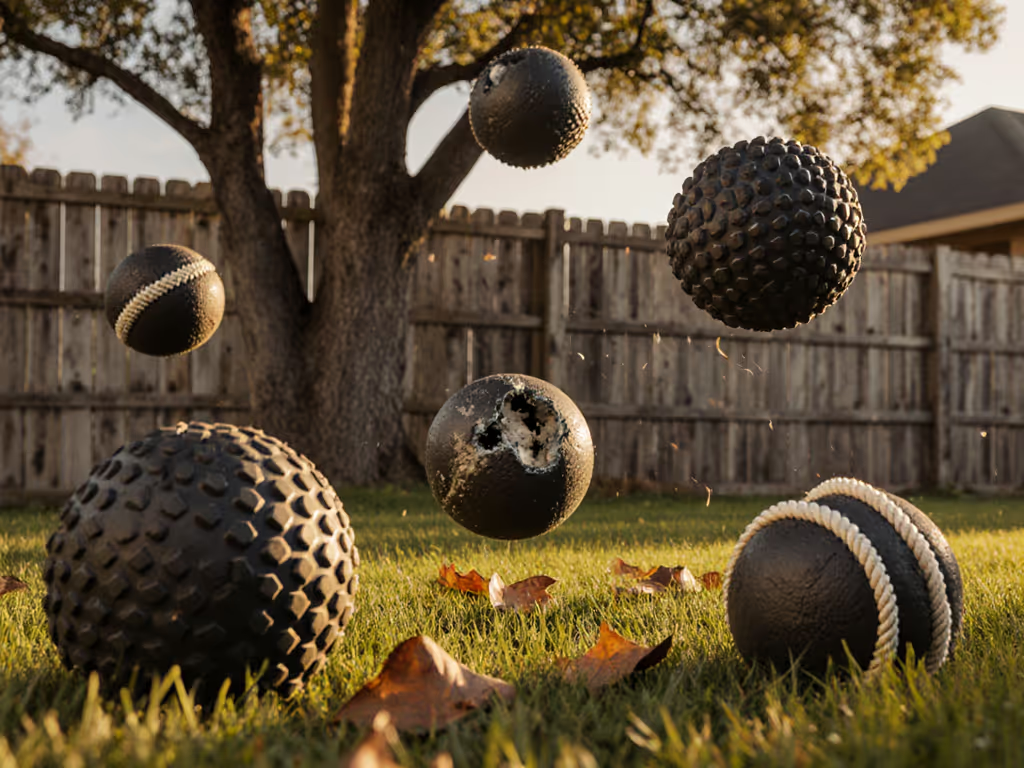
When evaluating what are the most durable dog toys, the evidence is unforgiving. Most fail predictably, and identifying which ones can actually survive aggressive chewing requires more than marketing claims. Indestructible treat-dispensing balls and high-durability fetch toys demand a framework grounded in material science, observable failure modes, and real-world stress data. This guide walks you through the criteria, material classes, and testing protocols that separate toys worth your investment from those destined for the trash.
Understanding Durability: What "Tough" Actually Means
Durability is not a single metric; it is the intersection of material composition, design geometry, and the specific arousal band your dog operates in during play. A toy that survives a 40-pound retriever's casual fetch may shatter under a 60-pound bully breed's sustained jaw pressure. This distinction matters because conflating them leads to false confidence and costly failures.
In peak intake season, enrichment rounds start before sunrise. I chart bite patterns, inspect seams, and log failure modes between kennel cleans. When a toy fails predictably across high-arousal dogs, we flag it. When it survives the week with interest intact, it earns a spot in our Playstyle Index. That inventory informs every recommendation here, not trend reports or affiliate sentiment.
There are three material classes worth comparing:
Material Class 1: Elastomer-Based (Natural & Synthetic Rubber)
These form the foundation of most premium fetch balls[1]. Elastomers deform under pressure rather than crack, which creates the illusion of safety but can mask embedded fatigue. A rubber ball that compresses repeatedly eventually loses resilience and fragments when the material reaches its fatigue threshold.
Risk profile: Low initial fragmentation risk, but prolonged chewing causes micro-tears that concentrate stress. Pieces shed gradually or suddenly release chunks when the weak point fails. Dogs with sustained jaw pressure (bully breeds, working-line shepherds) trigger this failure mode faster.
Best for: Medium-arousal chewers or dogs whose play pattern is intermittent fetch rather than continuous mouthing.
Material Class 2: Thermoplastic Blends (Nylon, TPE, Polypropylene)
These are engineered to resist crushing better than pure rubber[1]. Thermoplastics maintain rigidity under load, making them feel "tougher." However, they carry a different risk profile: they can splinter into sharp, swallowable pieces rather than flex.
Failure mode: Localized stress cracks that propagate into brittle shards. A dog that carries the ball obsessively and works the same spot repeatedly risks sharp fractures. The material does not warn you; it fails suddenly.
Best for: Intermittent chewers and fetch-focused play, provided seams are reinforced and monitored closely.
Material Class 3: Composite/Laminate Constructions
Premium options layer multiple material types, an outer elastomer shell bonded to a stiffer core, to balance deformation (softness) with structural integrity[1]. These are harder to engineer reliably and often fail at seams or bonding layers.
Failure mode: Delamination, the layers separate, creating flaps or voids that can trap debris or become choking hazards. This failure is often silent until it is catastrophic.
Best for: High-arousal dogs if the construction is verified through transparent testing, not marketing claims.
Safety margins, not marketing. This principle separates toys that earn shelf time from those that create liability.
Stress-Test Criteria: What to Evaluate Before Purchase
Chew Resistance Benchmarking
Chew resistance is not intuitive; a ball that feels hard is not necessarily hard to destroy. Three metrics matter:
- Time-to-first-damage: How long before visible wear (punctures, tears, compression set) appears under continuous mouthing by a high-arousal dog.
- Material shedding rate: Does the toy release dust, small fragments, or large chunks? Fragment size determines ingestion risk.
- Seam integrity: Seams are the first failure point. Double-stitched or heat-welded seams hold longer than glued or single-stitched.
Reliable sources log these metrics across breed size and bite force categories[1]. Aggregated data shows that balls rated for "aggressive chewers" without specifying jaw-force thresholds are making unverifiable claims.
Enrichment Dose and Engagement Duration
A fetch ball serves two functions: physical exercise and sustained engagement. High-arousal dogs need both, but they are distinct variables.
Engagement duration is how long the dog maintains active interest without losing focus. Many fetch balls lose novelty within 5-10 minutes. Dogs then either abandon play or escalate destructive chewing intensity, which increases failure risk.
Balls with treat-dispensing capability (whether via built-in chambers or fill-and-freeze designs) extend engagement because the puzzle element adds cognitive load. For tested picks by difficulty and durability, see our treat-dispensing toys comparison. These require:
- Openings sized for safe treat insertion (not so large they destabilize the structure).
- Materials that will not degrade if moistened (many thermoplastics do).
- Predictable treat release (not clumping or requiring tools to access).
Seizing Patterns and Anxiety Signals
Some high-drive dogs will mouth a ball obsessively, especially under boredom or mild separation distress. These arousal band behaviors accelerate wear. If a toy cannot handle 30-60 minutes of continuous mouthing, it is not suitable for a dog with that profile, no matter how well it performs in light-play scenarios.
Observe whether the toy becomes a self-soothing object (which is positive) or a compulsive fixation (which masks anxiety). The material class you choose should support the former without enabling the latter.
Comparative Framework: Key Decision Points
When evaluating options, use this layered approach:
1. Jaw Strength & Arousal Band Match
This is the non-negotiable first filter. Match the toy's risk profile to your dog's documented chew intensity:
- Low-arousal chewers (gentle, infrequent mouthing): Elastomer or thermoplastic toys with minimal reinforcement pass this profile.
- Medium-arousal chewers (regular fetch, moderate mouthing): Composite constructions or heavy-duty elastomers with reinforced seams.
- High-arousal chewers (continuous mouthing, sustained jaw pressure, power breeds): Only composites, laminated structures, or reinforced elastomers specifically tested at force thresholds above your dog's estimated bite pressure.
Threshold claim: A ball marketed for "all dogs" or "all sizes" is making an unverifiable claim. Durability is force-dependent[1].
2. Failure Mode Transparency
Reputable sources will explicitly state what breaks first and under what conditions[1]. Red flags:
- "Indestructible" or "unbreakable" language without caveats.
- Durability claims without specifying chew duration, dog weight, or bite force.
- Absence of guidance on when to retire the toy.
Green flags:
- Documented failure modes (e.g., "seam separation after 6+ weeks of daily use by 50+ lb. dogs").
- Specific recommendations for arousal level or breed size.
- Clear delineation between "durable for fetch" and "durable for aggressive chewing."
3. Material Safety & Ingredient Transparency
For toys that contact the mouth, material origin and coatings matter: For a deeper breakdown of risks by material and failure behavior, read our dog toy material safety analysis.
- Elastomers: Are they natural latex, synthetic rubber, or blended? Natural latex can trigger allergies; synthetic rubbers (EPDM, SBR) are more common but vary in purity.
- Thermoplastics: Check for BPA, phthalates, and PVC. Many premium brands now pledge freedom from these, but budget options often do not disclose.
- Coatings and colorants: Dyes can leach or wear off, creating ingestion risk. Ask whether coloring is integral to the material or applied as a surface treatment.
- Adhesives/bonding agents: Composites rely on glues or heat-welding. Some adhesives off-gas or degrade with moisture and repeated use.
Stress-test in shelter, then recommend for your living room. This means toys should perform under chaos (high humidity, multiple dogs, frequent mouthing) before you invest in them at home.
4. Seam Construction & Reinforcement
Seams are non-negotiable inspection points. The strongest constructions use:
- Double or triple stitching with thread gauge appropriate to material thickness.
- Heat-welding (thermal bonding) in addition to or instead of stitching.
- Reinforcing bands or overlays at seam lines to prevent stress concentration.
- Tapered edges near seams to reduce sharp points that can catch teeth.
Offer guidance: If seams show fraying, compression indents, or separation within the first 3-5 days, the toy's risk profile is too high for your dog's jaw strength. Retire it immediately.
5. Treat-Dispensing Integration
If indestructible treat-dispensing balls are on your shortlist, evaluate:
- Filling mechanism: Is it intuitive to load without a tool? Can it be sealed securely?
- Material compatibility: Does the interior material differ from the exterior? (Some soften or degrade when wet or freeze-dried.)
- Release rate: Do treats dispense during normal play or require aggressive pouncing? Higher difficulty = longer engagement but also higher risk of frustration-driven destructive behavior.
- Cleanability: Can it be disassembled for washing, or does debris accumulate inside? Trapped food creates mold and bacterial growth risks. Get step-by-step sanitizing methods by material in our cleaning dog toys guide.
High-Arousal Testing Insights
Data from shelter environments reveals patterns that home tests often miss. High-arousal dogs test toys under conditions most home guardians never replicate: back-to-back play sessions, multiple dogs competing for resources, minimal supervision, and continuous novelty fatigue.
Products that survive these conditions consistently exhibit:
- Minimal material shedding even after weeks of use (no visible dust or fragments on kennel floors).
- Stable geometry (no significant compression set or warping, meaning the ball returns to shape after pressure is released).
- Seam durability (no fraying, separation, or thread breakage after repeated stress).
- Color stability (no fading, discoloration, or surface erosion revealing underlying layers or adhesives).
Products that fail predictably show:
- Visible fragmentation within 3-7 days of high-arousal use.
- Seam separation or thread breakage under focused chewing.
- Material swelling or degradation if exposed to water or saliva for extended periods.
- Sudden brittle failure after an initial durability phase (suggesting cumulative fatigue rather than consistent material weakness).
Fetch-Specific vs. Chew-Specific: The Distinction Matters
Fetch balls and chew balls are not interchangeable, though marketing conflates them.
Fetch balls are optimized for bounce, aerial stability, and catch-ability. They typically use lower-density elastomers that compress easily and recover quickly, making them pleasant to carry. However, this same softness makes them vulnerable to sustained chewing.
Chew balls sacrifice bounce for durability. They use denser materials, thicker walls, and reinforced seams. They are slower to carry and less "fun" in a pure fetch context, but they reward sustained mouthing with resistance rather than rapid failure.
If your dog alternates between fetch and aggressive chewing, you need a hybrid, a ball dense enough to handle mouthing but elastic enough to maintain fetch engagement. These are rarer and typically more expensive[1].
Hard Chew Dog Toys: Material Progression
As your dog ages or as their jaw strength increases, the enrichment dose and material class you select should shift:
- Puppies (8-16 weeks): Soft, pliable elastomers; no reinforced seams or hard composites that risk tooth damage during eruption.
- Adolescents (4-12 months): Transition to medium-density materials with reinforced seams; introduce treat-dispensing variants.
- Adults (1-7 years): Full spectrum of composite and reinforced elastomer options; match to arousal band and jaw strength.
- Seniors (7+ years): Return to softer materials if tooth wear or sensitivity emerges; monitor seams and material integrity more frequently.
KONG Extreme Ball Alternatives: Comparative Scope
KONG Extreme products set a durability benchmark[1]. They use synthetic rubber with reinforced construction and consistent seam quality. However, they are not optimal for all profiles:
- Advantages: Proven track record, widely available, clear durability data, and transparent seam construction.
- Limitations: Less interactive (minimal treat-dispensing); less bouncy than standard fetch balls; premium pricing; some high-arousal dogs destroy them within weeks despite design intent[1].
Alternatives in the same durability tier should offer:
- Comparable material density and seam reinforcement.
- Transparent testing data at similar jaw-force thresholds.
- Competitive pricing or added features (treat-dispensing, dual material zones) that justify higher cost.
Interactive Chew-Resistant Balls: Engagement Strategies
Interactive chew-resistant balls combine durability with cognitive enrichment. These typically feature:
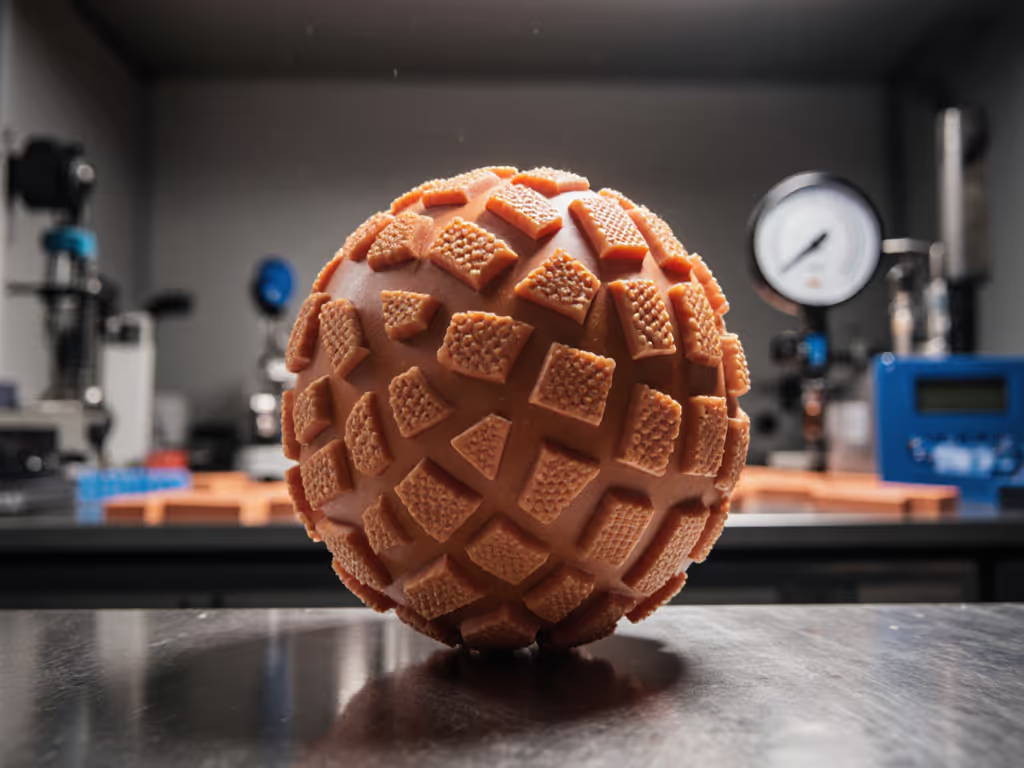
- Textured surfaces (nubs, ridges, grooves) that increase mouth engagement and slow consumption.
- Built-in or attachable treat chambers.
- Dual-material zones (soft outer layer with a rigid core) that reward persistent chewing with varying tactile feedback.
- Fill-and-freeze compatibility for extended enrichment.
These designs extend engagement duration significantly but require:
- Clear fill instructions and material compatibility guidance.
- Regular inspection for material degradation, especially if filled items are frozen.
- Monitoring for obsessive fixation; some dogs become neurotic about treat-dispensing toys if play is not rotated.
Practical Inspection & Retirement Protocol
Establish a weekly inspection routine:
- Visual scan: Look for surface damage, seam fraying, compression set, or discoloration.
- Tactile check: Run your fingers along seams, press the ball with moderate force (simulating your dog's bite), and listen for crackling or internal shifts.
- Seam stress test: Apply gradual tension to seams by hand; they should not yield or separate.
- Material integrity: Check for any areas where layers are separating or adhesives are failing.
Retire the toy if:
- Visible punctures or tears appear.
- Seams show separation or thread breakage.
- The ball compresses and does not return to shape.
- Any surface shows sharp edges, splintering, or cracking.
- Material texture degrades (becoming sticky, slimy, or powdery).
This discipline prevents the silent failure modes that create emergency veterinary visits.
Summary and Final Verdict
The most durable fetch ball for aggressive chewers is not the one with the slickest marketing; it is the one whose failure mode you can predict, whose material class matches your dog's jaw strength, and whose seam construction has survived documented high-arousal testing.
Prioritize this hierarchy:
- Match arousal band first: A toy rated for medium-arousal dogs will fail catastrophically in a high-arousal dog's mouth, no matter how strong the material.
- Verify seam construction: Seams fail first. Ask for explicit details about stitching, reinforcement, and testing data.
- Demand failure mode transparency: Toys that claim indestructibility without caveats are hiding something. Green flags: specific durability claims tied to chew duration, dog weight, and documented failure points.
- Consider enrichment duration: A durable toy that bores your dog in five minutes creates anxiety and destructive mouthing that accelerates wear. Prioritize designs that extend engagement through texture, treat-dispensing, or dual-material zones.
- Establish inspection discipline: Weekly checks catch micro-failures before they become safety hazards.
- Rotate materials: Use composite high-durability options for intense chewing sessions; rotate to lower-stress options during calm periods. This distributes wear and maintains engagement through novelty. Use a simple schedule from our dog toy rotation guide to keep interest high without overspending.
Stress-test in shelter, then recommend for your living room. This means you should observe your dog's specific chew intensity, jaw pressure patterns, and engagement profile before investing in premium options. What survives chaos survives your living room. What bores your dog in a shelter environment will bore them at home (and that boredom often masquerades as destruction).
Safety margins, not marketing. Your investment in a truly durable, well-matched toy pays dividends in fewer replacements, fewer vet visits, and a dog whose enrichment needs are genuinely met.
Related Articles