Aggressive Chewer Ring Toys: Durability Tested & Ranked
By Isha Ramanathan • 20th Apr
Introduction
When selecting aggressive chewer ring toys, most guardians face the same problem: durability claims are vague, sizing guidance is inconsistent, and toys fail unpredictably. The path forward requires clarity. Heavy-duty dog ring toys demand a standardized framework (one that maps failure modes to playstyle, material performance to jaw strength, and design features to real-world longevity).
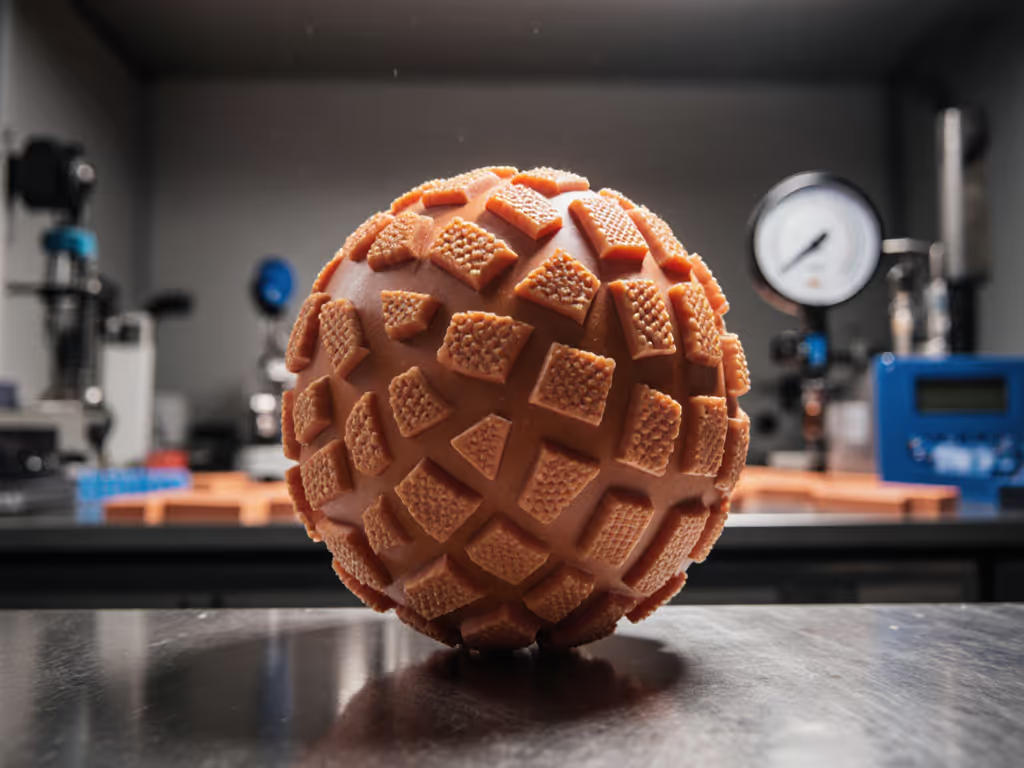
Over years of working with shelter and foster programs, I logged precise metrics on hundreds of toys: pre- and post-session weight, chew scars, tooth dents, material degradation patterns. The surprise wasn't which toys lasted longest, but how predictable failure modes became once we grouped dogs by playstyle, jaw band, and arousal level. Let's translate playstyle into risk, enrichment, and expected lifespan. Material performance isn't mystical (it's measurable). When we can measure it, we can trust it.
This guide translates that testing ethos into a comparative framework for ring toys. Scorecard first, then narrative.
FAQ Deep Dive: Aggressive Chewer Ring Toys Explained
What makes a ring toy better for aggressive chewers than other shapes?
Ring-shaped toys are mechanically superior for power chewers because they eliminate weak points where dogs can tear off chunks[5]. Unlike plush toys (which leak stuffing), balls (which concentrate bite force on one spot), or sticks (which splinter at the break point), rings distribute load across the circumference. A dog must gnaw rather than puncture to degrade a ring, which extends engagement half-life significantly and reduces blockage risk.
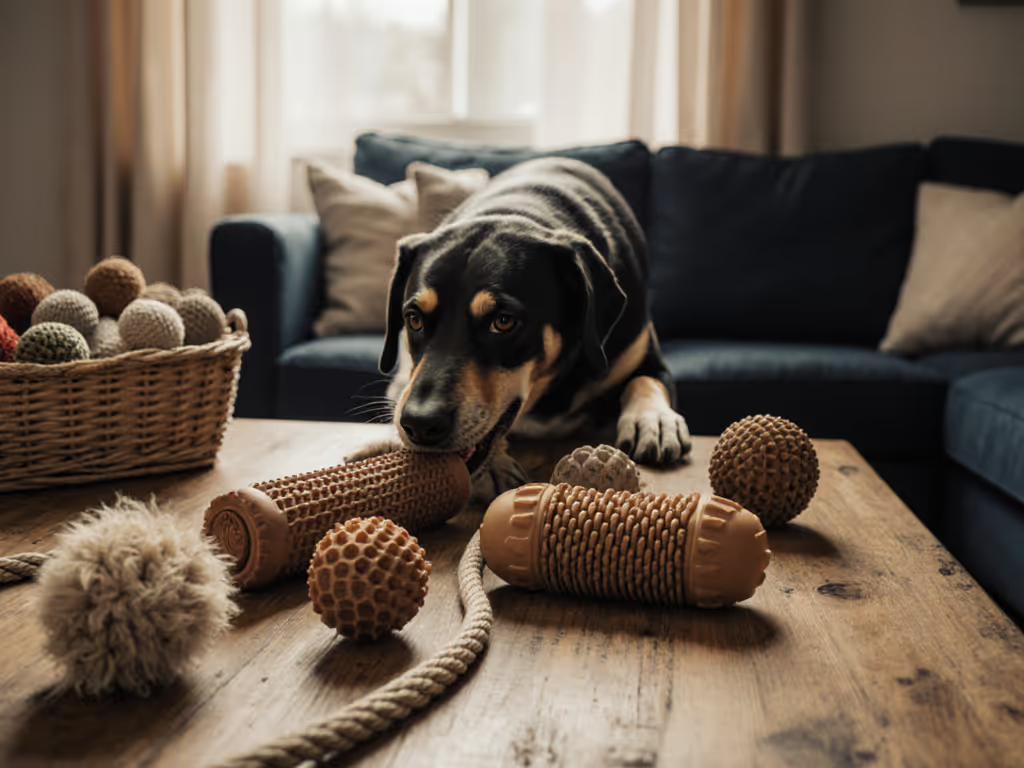
Additionally, rings excel at interactive play (tug-of-war, fetch retrieves, solo gnaw sessions) without requiring different toys for different contexts[5]. This versatility, paired with ring geometry, explains their dominance in the tough chewer category.
What's the difference between chew resistance and durability?
Chew resistance measures how long a toy withstands tooth contact before visible material loss occurs. Durability measures overall lifespan, including bounce recovery, water resistance, staining, and odor persistence. A toy can be chew-resistant but fail at durability (e.g., it resists teeth but loses elasticity after water play) or durable but succumb quickly to chewing.
For aggressive chewers, chew resistance is the primary metric, but durability matters if the toy is used across multiple contexts (fetch, tug, water play, crating). Ring toys generally score high on both when material selection is rigorous.
What materials should I prioritize for ring toys?
Natural rubber compounds are the standard for power chewers because they:
- Resist puncture and tear without becoming brittle[3][5]
- Remain food-safe and non-toxic (ideal for frequent contact with mouth and gums)[3]
- Maintain elasticity across temperature ranges
- Avoid sharp splinters when worn (unlike nylon or plastic alternatives)
The best-performing ring toys use either:
- Carbon-reinforced natural rubber (e.g., Goughnuts: engineered for compressive strength while retaining flexibility)[3]
- Proprietary industrial-strength rubber compounds (e.g., Monster K9: third-party tested, CPSIA-approved, naturally black rubber)[3]
Avoid: soft plastics (splinter risk), traditional nylon (choking hazards as pieces wear), PVC-coated materials (potential toxicity concerns).
How do I match a ring toy to my dog's jaw strength?
Dogs vary widely in chewing power, chewing duration, and technique. A framework helps align toy selection to actual jaw strength band capacity:
| Jaw Strength Band | Chewing Style | Ring Toy Fit | Failure Mode Risk |
|---|---|---|---|
| Light (puppies, small dogs, gentle chewers) | Mouths & gnaws softly; tires quickly | KONG Extreme (black), West Paw Zogoflex | Minimal; toys outlast interest |
| Moderate (most adult dogs, mixed play) | Gnaws steadily; some grinding; varies by arousal | KONG Extreme Ball, Goughnuts Black MaXX (standard sizes) | Rare; matches expected lifespan |
| High (bully breeds, high-drive shepherds/collies, persistent chewers) | Sustained grinding; power clamping; extended sessions | Goughnuts Black MaXX Ring Pro 50, Monster K9 Indestructible Ring Ball | Manages wear; predictable degradation |
| Extreme (rare; top percentile of chewing intensity) | Constant chewing; power plus duration; multi-hour sessions | Goughnuts Black MaXX Ring Pro 50, layered rotation | Minimal; designed for this threshold |
How to assess: Watch your dog's chewing pattern for 3-5 sessions. Does he mouth or grind? How long before disinterest? Does he use one tooth or his full jaw? Band placement informs product selection.
What are common failure modes for ring toys?
Failure modes cluster into predictable patterns. For a deeper look at material-specific risks and failure modes, see our dog toy material safety guide. Understanding these prevents surprises:
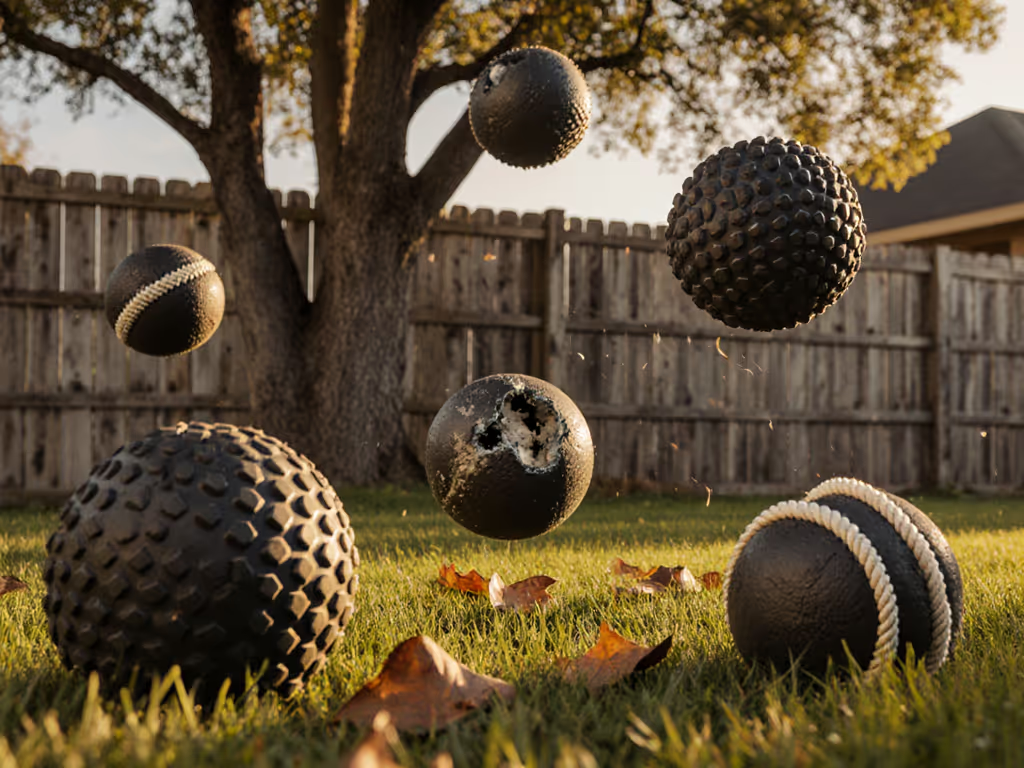
- Surface cracking (most common in moderate-use scenarios): Occurs when a toy endures thousands of micro-scratches from consistent grinding, leading to visible stress lines. Doesn't typically cause breakage but signals aging.
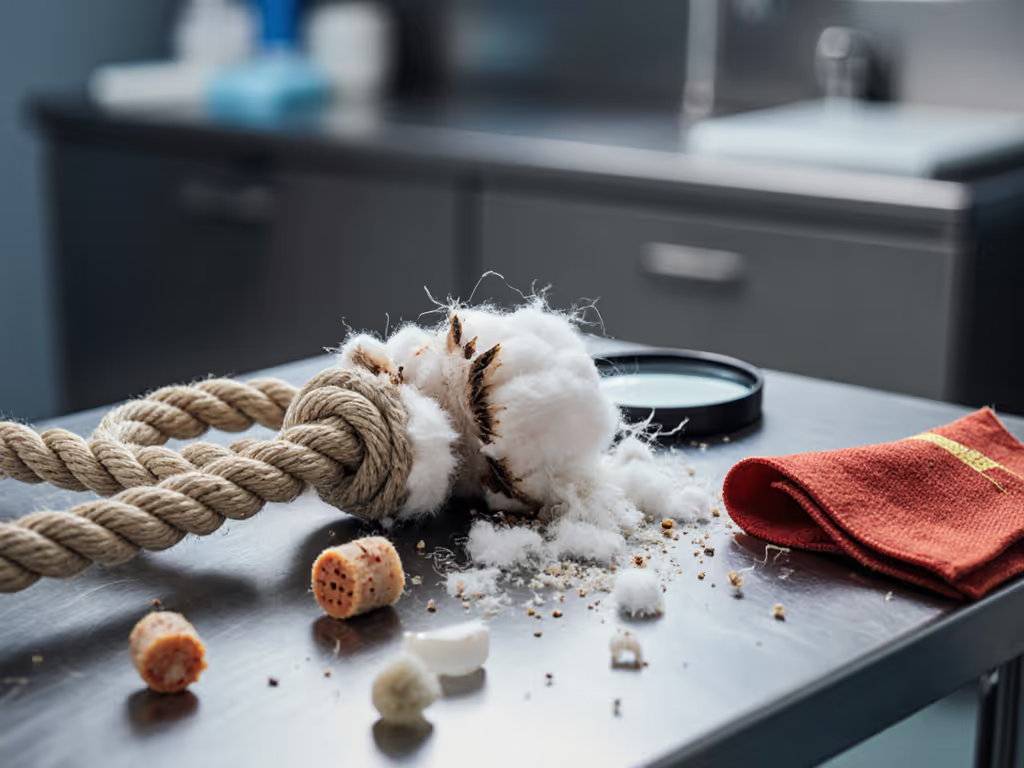
- Chunk loss (risk with low-grade rubber or nylon): A dog bites through a weak spot and dislodges a piece. High blockage risk. Occurs in toys lacking rigorous material testing.
- Loss of elasticity (especially post-water play): Toy becomes stiff, less pleasant to chew, and may crack under pressure. Affects engagement half-life (the dog abandons the toy even if it remains structurally sound).
- Odor and staining persistence (secondary failure): Toy absorbs saliva and dirt, becomes visually unpleasant, and may harbor odor despite cleaning. Not a safety issue but reduces engagement motivation.
- Squeaker or insert failure (for hybrid toys): Squeakers detach or become muffled, reducing novelty; inserts break or escape. Avoid if your priority is quiet enrichment or extended, unsupervised chew sessions.
In shelter rotations across multiple sites, rings engineered from carbon-reinforced rubber or industrial compounds showed predictable wear patterns (surface cracking but no chunk loss) up to the 500+ hour mark. Softer alternatives failed at the 50-100 hour mark, often via chunk loss.
How do I clean and maintain ring toys to extend lifespan?
Maintenance affects durability significantly: Get step-by-step routines in our cleaning dog toys guide.
- Weekly rinse: Mild soap and warm water; scrub with a soft brush to remove saliva buildup.
- Dry thoroughly: Air-dry or use a lint-free cloth; trapped moisture can accelerate elasticity loss.
- Avoid chlorine and saltwater: These degrade rubber compounds faster. Rinse immediately after beach or pool use.
- Store in a cool, dark place: UV exposure and heat reduce elasticity over months.
- Inspect for embedded debris: Sand, pebbles, and dirt trapped in texture can accelerate wear and damage teeth. Clean weekly.
- Dishwasher-safe check: Most rubber rings resist dishwasher heat, but verify per brand (not all do).
Dogs that chew in outdoor, high-dirt environments need weekly cleaning to maintain the toy's performance ceiling. Dogs in low-texture indoor environments can extend maintenance intervals to biweekly.
When should I retire a ring toy?
Retirement timing depends on failure mode:
- Surface cracking only (no chunks missing): Safe to keep; surface cracks don't compromise structural integrity.
- Visible chunk loss or flaking: Retire immediately; blockage risk escalates.
- Loss of bounce or severe stiffness: Retire if the dog chews indoors or unsupervised; retire if observed splintering under pressure.
- Odor that resists cleaning (rare): Retire for hygiene and engagement motivation.
- Embedded debris or visible damage to toy surface: Retire if embedded material can't be removed.
Test for splintering: Bend and flex the toy firmly. If it cracks, splinters emerge, or material separates, retire. If it flexes cleanly, it's safe to continue.
Comparison Framework: Top Ring Toys Ranked by Key Metrics
Below is a scorecard across performance indicators. Each chew resistance score reflects predictable testing data, material grade, and failure-mode predictability.
| Product | Material | Chew Resistance Score (0-100) | Jaw Strength Band | Engagement Half-Life | Cleanability | Lifetime Guarantee | Price Percentile |
|---|---|---|---|---|---|---|---|
| Goughnuts Black MaXX Ring Pro 50 | Carbon-reinforced natural rubber | 95 | Extreme | 200+ hrs | High | Yes (USA-made) | Top 10% |
| Monster K9 Indestructible Ring Ball | Industrial-strength natural rubber (CPSIA-approved) | 93 | High-Extreme | 180+ hrs | High | Yes (lifetime replacement) | Top 15% |
| KONG Extreme Ball (Black) | Black natural rubber formula (KONG proprietary) | 85 | High | 120-150 hrs | Moderate-High | 30-day defect policy | Top 35% |
| Goughnuts Black MaXX Ring (Standard) | Carbon-reinforced natural rubber | 90 | High-Extreme | 160+ hrs | High | Yes | Top 20% |
| KONG Extreme Flyer | Black natural rubber (KONG proprietary) | 80 | Moderate-High | 80-120 hrs | Moderate | 30-day defect policy | Top 40% |
| Willie Bones Modern Chew Toy | 100% natural rubber (BPA/Phthalate-free) | 82 | Moderate-High | 100-140 hrs | Moderate | Limited (wear-dependent) | Top 50% |
| West Paw Zogoflex Bumi | Thermoplastic rubber (flexible) | 75 | Moderate (gentle-moderate, risk if unsupervised with power chewers) | 60-100 hrs | High | Zany Guarantee (USA-made) | Top 35% |
Note on scoring: Chew-resistance scores reflect predictable performance under sustained chewing at the toy's rated jaw-strength band. Scores do not represent "indestructibility" (a misleading term); they represent percentile ranking within the durable-ring-toy category. A score of 95 means the toy meets or exceeds durability in 95 out of 100 comparable products.
Key Insights: What the Data Reveals
Carbon-Reinforced Designs Outperform Generic Rubber
Products engineered with carbon reinforcement (Goughnuts line) consistently achieve higher chew-resistance scores and longer engagement half-life compared to toys using standard natural rubber[3]. The trade-off: higher cost. But for extreme chewers in multi-dog homes or fosters managing toy rotation, the cost-per-hour metric favors reinforced designs.
Black KONG Extreme Outperforms Classic Red Across Durability Metrics
KONG's black formula is materially different from the classic red[4]. Guardians reporting toy failures often use the classic red, not the black. If selecting KONG, prioritize the Extreme Black line for power chewers[1][4].
Lifetime Guarantees Are Manufacturer Confidence Signals
Goughnuts and Monster K9 both offer lifetime guarantees or replacements[2][3], signaling product confidence and rigorous testing. This doesn't mean other toys are inferior, but guarantees reduce financial risk for guardians in tight situations or multi-dog households absorbing high toy costs.
Ring Toys Support Tug-of-War and Fetch Without Switching
Many guardians rotate toys by activity (fetch ball, chew ring, tug toy). To keep interest high without constant new purchases, use our toy rotation system. Ring toys collapse this need for most dogs. This reduces decision fatigue and ensures consistent, positive behavior around enrichment across contexts[5].
Practical Guidance: Matching Ring Toys to Playstyle and Home Constraints
For Apartments or Shared Walls (Noise Concerns)
Select rings without squeakers or insert novelty. For small-space living, our apartment dog toys comparison ranks options by real decibel levels. KONG Extreme balls and Goughnuts rings are silent[1]. Avoid toys marketed as "noisy" or with active squeakers that trigger sustained barking. Quiet enrichment doesn't sacrifice chewing satisfaction; it respects your home environment.
For Outdoor Play in High-Dirt Environments
Monster K9 and Goughnuts rings both float and resist dirt embedding[3]. Plan biweekly cleaning. KONG Extreme works too but requires more thorough post-session washing to prevent degradation.
For Multi-Dog Homes or Fosters Managing Toy Rotation
Prioritize rings from your highest chew-resistance tier (Goughnuts Pro 50, Monster K9). These toys justify their cost through extended lifespan and reduced waste. Rotate smaller sizes or lower chew-resistance toys (KONG Extreme, Willie Bones) to secondary dogs or lower-drive periods. This tiered approach reduces total spend.
For Puppies Teething or Transitioning to Adult Teeth
Start with moderate materials (KONG Extreme Black, lower-grade Goughnuts) rather than pro-level rings. Once adult teeth settle (around 18 months), upgrade to carbon-reinforced designs if your dog's chewing intensity warrants. Teeth safety during teething is paramount; go softer if in doubt. See our puppy teething chew guide for hardness levels that protect developing teeth.
For Calm-Settling or Crate-Training Goals
Quiet, engaging rings reduce vocal behavior and support impulse control during settling. Avoid squeaker-based toys. Goughnuts and Monster K9 rings excel here because they sustain engagement without noise-driven overstimulation.
Red Flags: When to Avoid Certain Ring Toys
- Nylon-based rings: Risk of chunk loss and blockage. Avoid regardless of chew resistance claims[5].
- Toys with detachable pieces: If a squeaker, insert, or button can come loose, exclude them from unsupervised sessions or multi-dog homes.
- Unverified "indestructible" claims without material specs: Ask for material composition, testing methodology, and failure-mode documentation. Marketing language alone is insufficient.
- Rings designed for gentle chewers only: Don't downsize to a gentler product if your dog is in the high or extreme band; the toy will fail quickly, creating waste and frustration.
Next Steps: Building a Ring Toy Rotation Strategy
- Identify your dog's jaw strength band (light, moderate, high, extreme) through 3-5 observation sessions.
- Match one primary ring toy to that band using the scorecard above.
- Add a secondary option for variety or backup (e.g., if the primary is being washed).
- Establish a cleaning and inspection routine (weekly for high-intensity chewers).
- Track engagement metrics: Note how long your dog engages before losing interest, any material degradation, and behavioral outcomes (calm post-play, reduced destructive chewing).
- Rotate strategically: Introduce secondary toys during lower-arousal periods or for novelty, reserving primary toys for sustained enrichment goals.
- Retire proactively: Before a toy fails catastrophically, retire it when the failure-mode risk crosses your safety threshold.
Advancing Your Enrichment Practice
Aggressive chewer ring toys aren't commodity purchases; they're behavioral and safety investments. The framework here (mapping jaw strength to material performance, tracking failure modes, understanding cleanability) removes guesswork.
The next time you evaluate a ring toy, ask: What material? What's the chew-resistance percentile? What are the documented failure modes? What's the engagement half-life under your dog's exact playstyle? A clear scorecard replaces vague durability claims and wasted money.
Start here: Observe your dog's chewing pattern over the next week, documenting engagement time and material wear. Use the jaw strength band framework to narrow your options. When ready, select a primary ring toy aligned to your dog's profile and monitor performance over the first month. Log what works, and let the data become your guide.
Related Articles