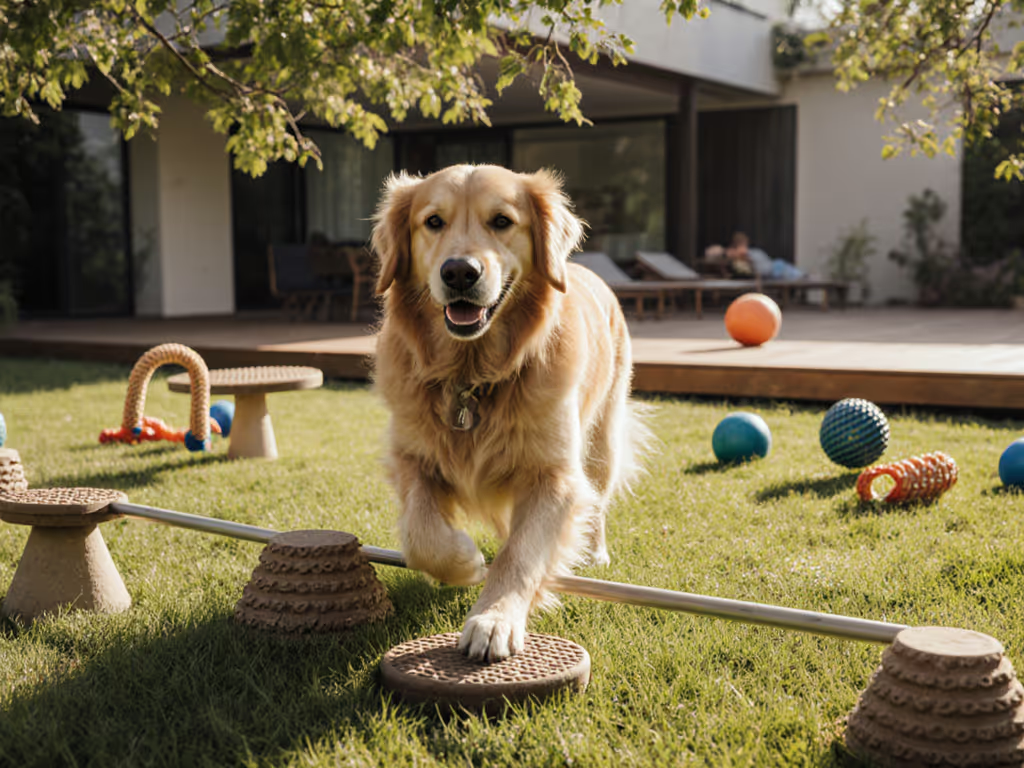
Canine Circadian Rhythm Toys: Timing Play to Your Dog’s Clock
By Alma Rivera • 2nd Jun
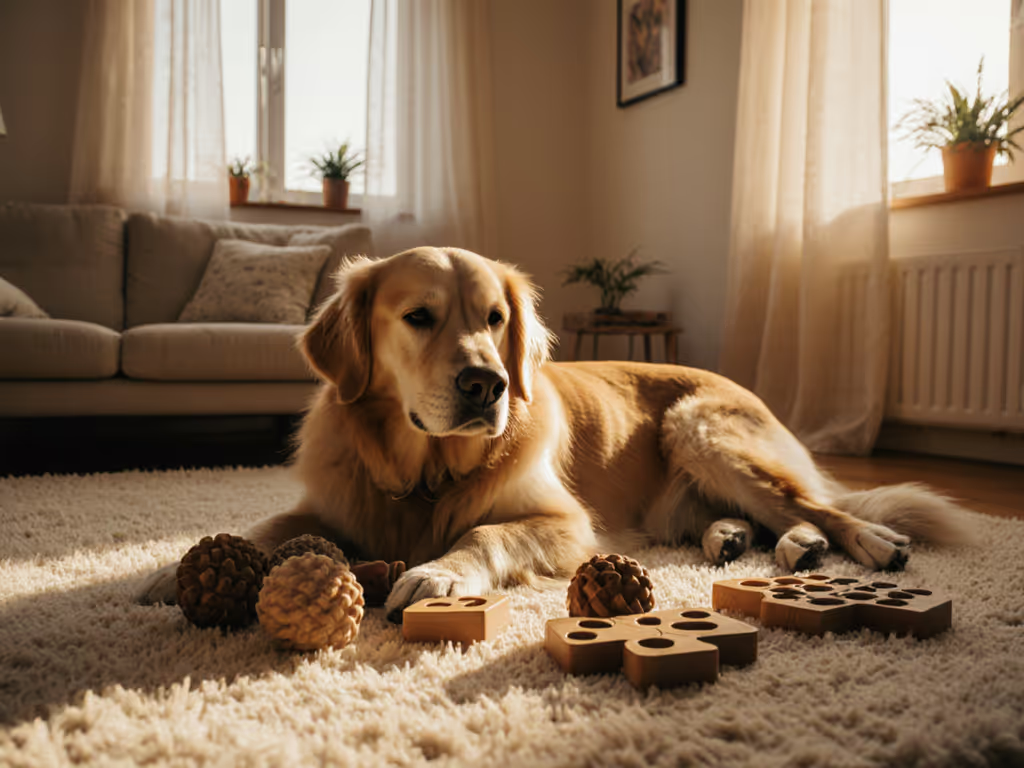
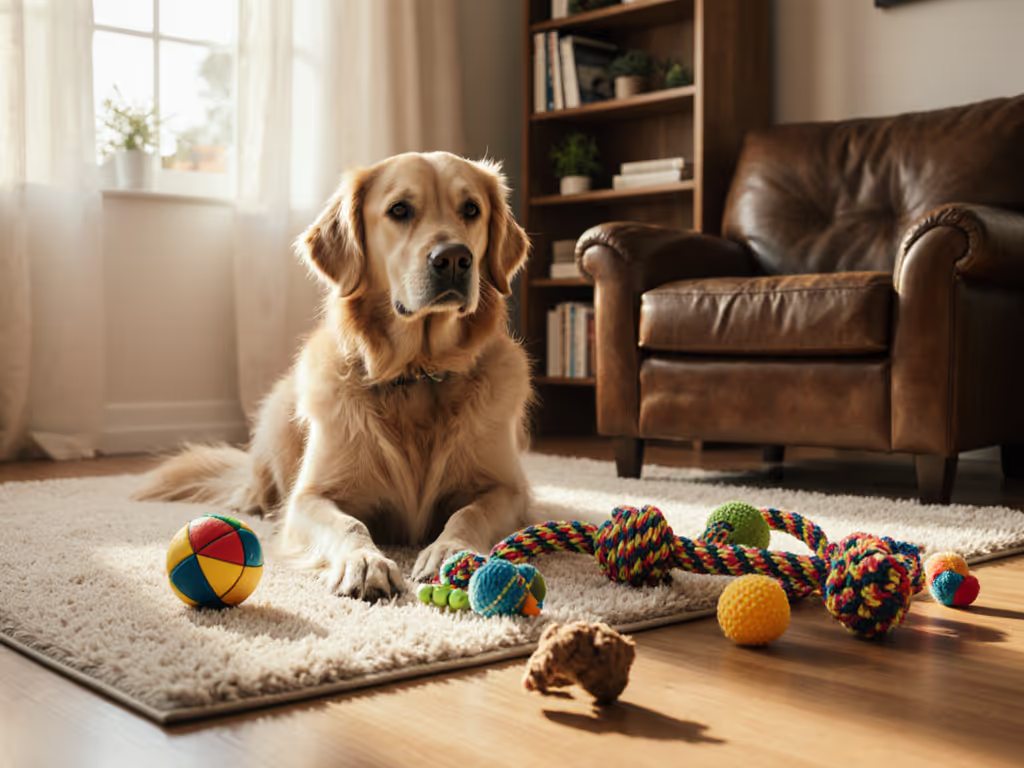
Most guardians focus on what toy to buy and forget when to use it. Canine circadian rhythm toys and biological clock play timing are about matching toy type and intensity to your dog's internal 24-hour cycle so play leads to calm, not chaos.[6][7]
Dogs, like humans, have circadian rhythms - biological clocks tied to light-dark cycles that regulate sleep, appetite, and activity.[6][7] Circadian medicine research in animals shows that when those clocks are well synchronized to light and routine, behavior and health are more stable.[4] When we ignore that clock and toss a high-arousal squeaker at 10 p.m., we often get barking, zoomies, and restless nights instead of relaxation.
Quiet brains beat loud rooms: design enrichment around life.
This article builds a practical, data-minded framework for circadian rhythm enrichment that fits real homes: shared walls, babies napping, and work calls that cannot be interrupted.
The Problem: Great Toys, Wrong Time Of Day
You can have the best puzzle or chew on the market and still get:
- A dog who is wired at bedtime
- Barking and pacing when you need to focus on work
- Destruction when you step out
... simply because the toy's arousal level conflicts with your dog's natural peaks and dips.
We know dogs do not read clocks. They build a sense of time through circadian timing (day-night cycles), interval timing (how long since last event), and environmental cues like light, sounds, and routine.[5][6][7] If fetch, dinner, and your return from work always cluster in the same window, their brain starts predicting that energy spike before it happens.[5][6]
When play is mistimed, you feel it:
- Noise profile: Loud squeaks or high-impact play ricochet through thin walls right when neighbors or kids are sleeping.
- Mess index: Late-night crumbs, wet stuffing, or sticky fillers that you are too tired to clean, so odors and bacteria build. Set a simple routine with our cleaning dog toys guide to prevent odor and germ buildup when play runs late.
- Supervision load: You end up watching like a hawk at 11 p.m. to prevent swallowed parts.
- Sleep disruption: Arousing games close to bedtime can delay sleep onset; dogs, like other mammals, rely on night-time to consolidate rest and hormone cycles.[4][6][7]
Puppies add an extra wrinkle: they do not have a fully established circadian rhythm at birth.[2] Their sleep-wake cycles are short, and they tend to become active earlier in response to first light than adults.[2] That means 4 a.m. play demands are developmentally normal, but the wrong toy choice at that hour can wake the whole building.
I learned this the hard way in a tiny apartment with a bouncy herder foster, thin walls, and a night-shift neighbor. The toy itself was fine. The timing and noise profile were not.
The Science: How Your Dog's Clock Really Works
Circadian rhythms are 24-hour biological cycles that respond mainly to light and darkness, affecting sleep, hormone release, body temperature, and activity.[4][7] In dogs, as in people, these rhythms are driven by an internal clock in the brain but tuned by external cues like daylight and routine.[6][7]
Key points that matter for play:
- Light is a primary time cue. Changes in light and darkness help align internal clocks with the environment.[4][6][7] Bright, blue-enriched light supports daytime alertness in many species, while darkness and warmer light tones cue rest.[4]
- Dogs rely heavily on routine. They learn that certain sequences (you closing a laptop, keys jingling, blinds going up) predict events like walks, meals, or alone time.[5][6][7]
- They sense intervals, not minutes. Dogs track how long it has been since a past event using memory and even scent decay, rather than understanding numeric clock time.[5][6]
- Puppy clocks are immature. Young puppies wake, play, and sleep in shorter cycles and often become active earlier than adults relative to first light.[2]
One vet-reviewed overview describes it this way: dogs tell time through rhythms, routines, and sensory cues, not through abstract hours.[6] That is exactly why biological clock synchronization with your household routine is so powerful.
If you consistently pair:
- Daylight and movement with active toys
- Midday quiet with low-mess, stationary enrichment
- Dusk and dim light with soothing, repetitive licks or cuddling toys
... your dog's internal clock begins to expect and lean into those shifts. For circadian scheduling tips, see our peak play times guide to sync sessions with your dog's natural highs and lows.
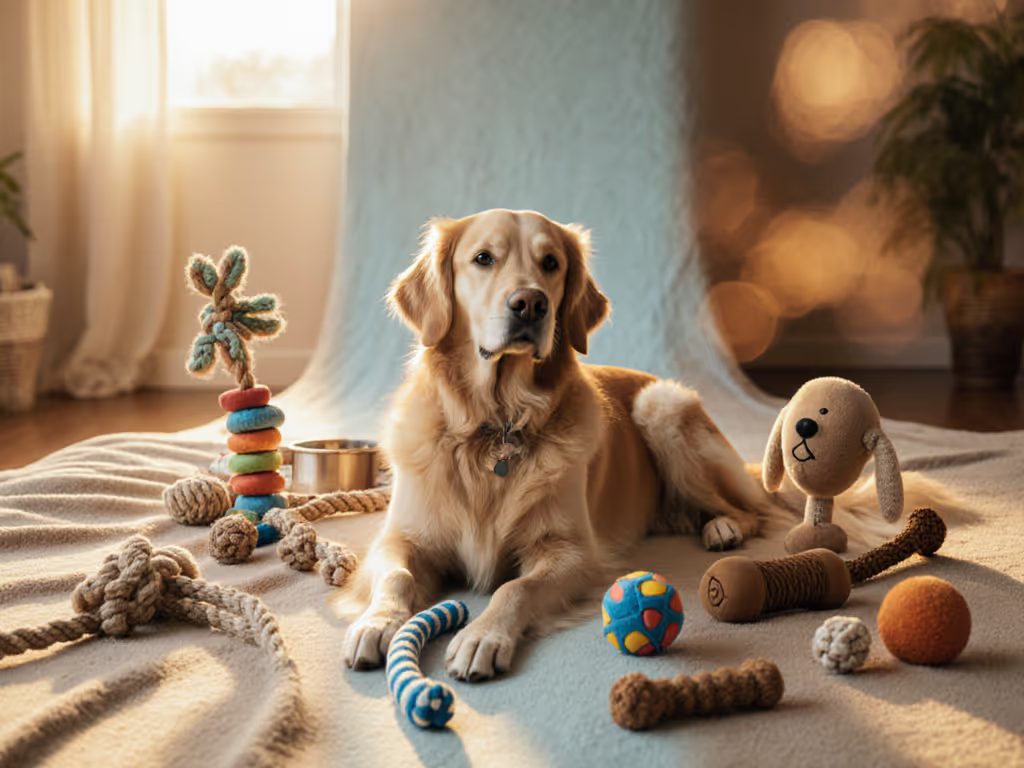
The Solve: Match Toy Type To Time Of Day
Below is a practical framework for optimal play timing using Quiet-first picks. Each time window includes a quick profile:
- Noise profile: Low / Medium / High
- Mess index: Low / Medium / High
- Supervision load: Low / Medium / High
- Wash cycles: How easily it fits regular cleaning (Excellent / Fair / Poor)
- Setup time: Approximate effort (Minimal / Moderate)
Morning: Channel the Natural Activity Peak
Many adult dogs show higher activity and alertness after morning light, reflecting circadian-driven arousal and routine anticipation.[6][7]
Goal: Spend that peak on constructive outlets.
Good fits:
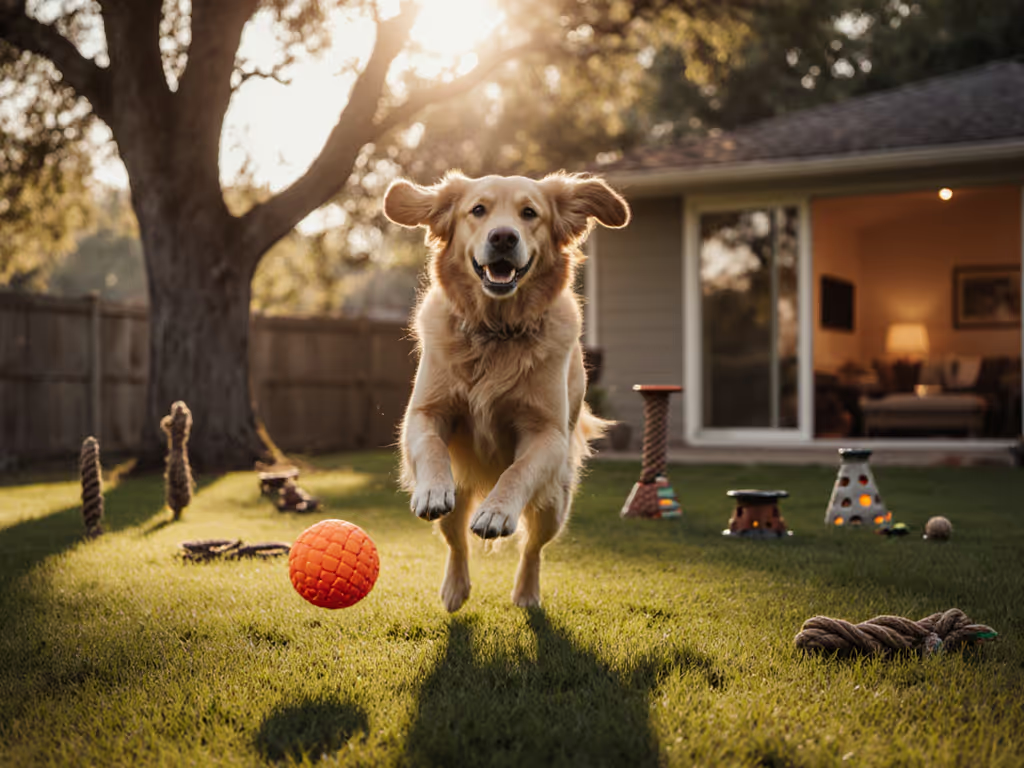
- Short fetch or tug sessions on a walk (Noise: Medium outdoors; Mess: Low; Supervision: Medium; Wash cycles: N/A; Setup: Minimal)
- Active food puzzles that roll or wobble, encouraging movement (Noise: Medium if hard floors; Mess: Medium with kibble crumbs; Supervision: Medium; Wash cycles: Often Excellent if dishwasher safe)
Morning is when you can safely deploy slightly noisier options outside or on rugs to buffer sound. For apartments, choose softer materials or rubber to reduce clatter.
Midday: WFH Quiet and Solo Time
During work blocks, we want circadian rhythm enrichment that nudges the brain into focused, steady engagement without big arousal spikes.
Goal: Quiet, longer-duration occupation with low oversight.
Good fits:
- Long-lasting rubber chews stuffed and frozen (Noise: Low; Mess: Medium if filling; Supervision: Medium early, then Low once you know the dog's patterns; Wash cycles: Excellent in top-rack dishwasher; Setup: Moderate)
- Flat or textured lick mats with thin spreads, sometimes frozen (Noise: Low; Mess: Medium but contained; Supervision: Low-Medium to prevent chewing the mat; Wash cycles: Fair to Excellent depending on crevices; Setup: Moderate)
The repetitive licking and chewing here support calmer post-play states for many dogs, especially when used predictably at the same time each day, aligning with their learned sense of midday quiet.[5][6]
Late Afternoon: Pre-Dinner Reset
Late afternoon often becomes an anticipatory storm: energy spikes as dogs predict your end of work and dinner time based on routine and environmental cues.[5][6][7]
Goal: Bleed off just enough energy and focus to prevent meltdown at meal or walk time.
Good fits:
- Snuffle mats or scatter feeding in a defined zone (Noise: Low; Mess: Medium due to crumbs; Supervision: Medium to prevent fabric chewing; Wash cycles: Fair if machine washable on gentle; Setup: Moderate)
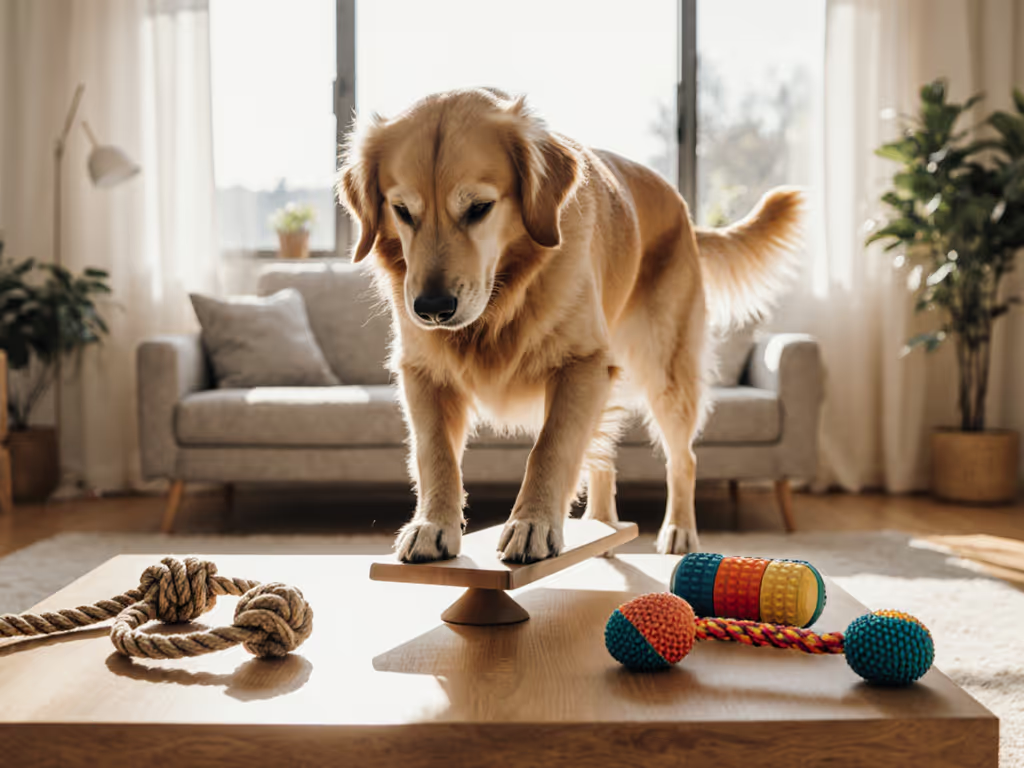
- Moderate-difficulty stationary puzzle toys that require paw or nose work but not full-speed chasing (Noise: Low-Medium; Mess: Low-Medium; Supervision: Medium; Wash cycles: Fair)
Here, biological clock play timing means starting this 20-40 minutes before you normally feed or walk. Your dog's brain will gradually map scent-based hunting and problem solving to that pre-dinner window, smoothing the transition.
Evening: Wind-Down, Not Wind-Up
As light decreases, internal clocks across species trend toward lower activity and preparation for sleep.[4][6][7] Evening toys should cooperate with that shift.
Goal: Promote relaxation and easy sleep onset.
Good fits:
- Simple, low-effort food toys with soft fillings that are mostly licking, not full-body chasing (Noise: Low; Mess: Medium; Supervision: Low-Medium; Wash cycles: Excellent if smooth-surfaced)
- Gentle, quiet plush toys for light mouthing or cuddling, especially in dim light (Noise: Low; Mess: Low while intact; Supervision: Medium for power chewers; Wash cycles: Fair if machine washable)
This is not the time for new, ultra-exciting squeakers or high-impact tug sessions. For noise-sensitive homes, evening is when your noise profile should be at its lowest.
Overnight and Alone-Time: Comfort and Predictability
At night, we shift from "tire the brain" to "anchor the clock." Consistent, low-arousal objects paired with darkness and quiet help dogs link these cues to rest.
Goal: Provide steady comfort and reduce anxiety during sleep or alone periods.
Good fits:
- Heartbeat-style comfort plushes with internal pulsers that mimic a living heartbeat, sometimes paired with gentle warmth pads.[1][3] These are designed primarily for comfort, particularly for puppies or anxious dogs at night.[1][3] Explore proven anxiety relief plush toys to support calmer nights without adding noise.
- Noise: Very Low (soft pulsing)
- Mess index: Low
- Supervision load: Low once chewing risk is assessed
- Wash cycles: Check if the mechanism is removable; covers are often machine washable
- Setup time: Minimal
- Soft blankets or designated sleep-only soft toys that appear only at bedtime (Noise: Low; Mess: Low; Supervision: Low once habits are known)
Paired with dark, quiet environments, these canine circadian rhythm toys help the body clock associate that sensory package, dim light, gentle heartbeat, familiar scent, with sleep.[1][3][4]
For puppies whose circadian rhythms are still developing, giving a safe food puzzle or extra comfort object when they wake at an odd hour is a valid stopgap; experts note that sleep-wake regulation matures with age and is largely self-limiting.[2]
Quick Reference: Time-Of-Day Toy Planning
| Time of day | Primary goal | Toy / enrichment type | Noise profile | Mess index | Supervision load |
|---|---|---|---|---|---|
| Morning | Channel energy | Active puzzles, outdoor fetch or tug | Medium | Low-Med | Medium |
| Midday | Quiet occupation | Frozen chews, lick mats | Low | Med | Low-Med |
| Late afternoon | Pre-dinner focus | Snuffle mats, stationary puzzles | Low-Med | Med | Medium |
| Evening | Wind-down | Soft food toys, gentle plush play | Low | Low-Med | Low-Med |
| Night / alone | Comfort | Heartbeat plush, sleep-only soft items | Very Low | Low | Low |
Every row can be tuned to your home with five levers: noise profile, mess index, supervision load, wash cycles, setup time.
Quiet brains beat loud rooms: design enrichment around life.
Your Next Quiet-First Experiment (Tonight)
To put light cycle play planning and biological clock synchronization into action without overhauling your life, try this simple sequence:
- Map your dog's natural peaks and dips for three days. Note when they tend to zoom, nap, bug you for food, or pace. You are observing their current circadian and routine-driven pattern.[5][6][7]
- Assign one toy type to each key window. Use the table above: one active option for morning, one quiet work block toy, one pre-dinner sniff or puzzle, one wind-down option, one sleep or comfort object.
- Score each option:
- Noise profile: 1 (quiet) to 5 (very loud)
- Mess index: 1 (wipe and done) to 5 (requires vacuum or mop)
- Supervision load: 1 (can be used in another room) to 5 (eyes on at all times)
- Wash cycles: 1 (hand wash only) to 5 (dishwasher or hot machine wash)
- Setup time: 1 (grab and go) to 5 (complex prep)
- Swap one toy per day to reduce conflict. Start where your pain is highest: maybe replacing the loudest evening toy with a lick mat, or adding a heartbeat-style comfort plush to the nighttime routine.[1][3]
- Hold the schedule steady for two weeks. Dogs learn by patterns; consistent timing lets their internal clock align with the new enrichment rhythm.[5][6][7]
You do not need more toys; you need a better match among toy type, timing, and household constraints. Start with Quiet-first picks, layer them onto your dog's natural rhythms, and let their biology do some of the heavy lifting for calmer days and quieter nights.
Related Articles