Peak Play Times: Sync Your Dog's Circadian Rhythm
By Zara Haddad • 31st Mar
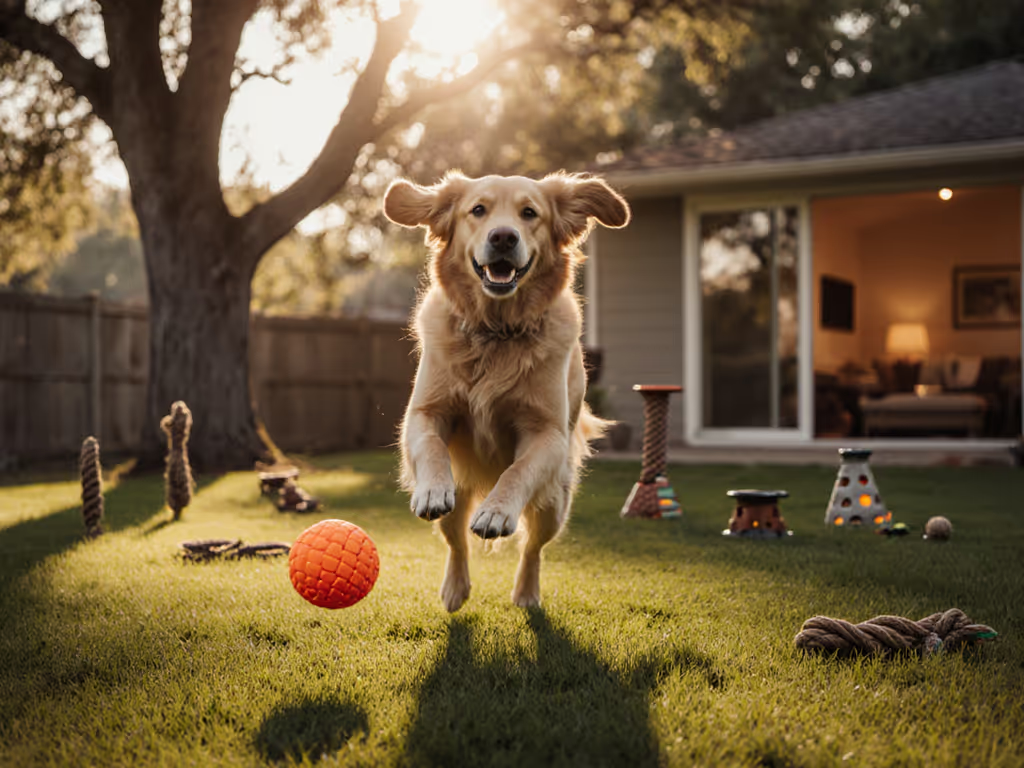
Your dog's energy peaks and valleys follow a biological clock and play-timing pattern just as structured as your own, but most guardians miss the opportunity to harness it. A dog's internal 24-hour cycle, known as a circadian rhythm, governs when they're most alert, hungry, and primed to play. By aligning enrichment moments with these natural peaks, you can deepen engagement, reduce destructive behavior, and create a canine circadian rhythm toy strategy that works with biology instead of against it.
This isn't about rigid rules. It is about pairing your dog's energy architecture with toys and timing that match their rhythm, turning wasted effort into moments that actually land. If you're unsure which toy types fit your dog's instincts, start with our dog play styles guide.
1. Understand How Dogs Actually Track Time
Dogs don't read clocks. Instead, they navigate their day through three overlapping time-sensing systems:
- Circadian timing (the big picture): Internal rhythms tied to light and dark cycles that regulate sleep, hunger, and alertness across the full day
- Interval timing (the medium frame): A sense of duration (how long a walk usually lasts, when dinner typically arrives) that shapes anticipation
- Implicit timing (the daily beat): Memory of routines and sensory cues (door sounds, scent fading, your arrival pattern) that predict outcomes
Your dog isn't choosing to beg at 5 p.m., their body is literally telling them dinner comes then. This is your entry point. When you layer play and enrichment into these predictable windows, you're not fighting their biology; you're speaking their language.
2. Map the Typical Daily Circadian Arc
Most dogs in homes synced to human schedules follow a predictable rhythm, though individual patterns vary based on age, fitness, and household routine:
Early morning (6-8 a.m.) Dogs typically wake 15-30 minutes before their handler's morning routine begins. Energy is moderate, focus is sharper after sleep, and receptiveness to cognitive enrichment is highest. This is ideal for puzzle toys, scent work, or training-paired play.
Mid-morning to early afternoon (9 a.m.-3 p.m.) Daytime activity depends heavily on household rhythm. Dogs whose guardians work from home or are present often rest and nap in polyphasic bursts (short intervals with movement between). Dogs in kenneled or structured settings rest more solidly but wake frequently. Brief, low-intensity enrichment works here; heavy chewing or high-drive toys may overstimulate and disrupt rest. To keep novelty high without adding more items, use a toy rotation system that aligns with nap windows.
Late afternoon (3-5 p.m.) A secondary energy peak often emerges as anticipation for evening routines builds. This is a strong window for sustained play, fetch, or interactive toys, the dog's arousal is naturally primed without external overstimulation.
Evening (5-8 p.m.) Energy remains elevated during household activity. Many dogs settle into their first major sleep bout between 6-7 p.m. Offering calm, solo enrichment (long-lasting chews, puzzle toys requiring focus but not frenzy) at the start of this window can support the transition to restfulness. A simple option is a lick mat to promote quiet, sustained focus without raising arousal.
Night (8 p.m.-6 a.m.) Dogs sleep in fragmented bouts, averaging 6+ hours of nocturnal sleep but with multiple awakenings. This period is not a play window; your job is to protect sleep quality, which directly affects daytime behavior, alertness, and mood.
3. Align Enrichment to Energy Peaks, Not Just Availability
The mistake most guardians make is offering toys when they're free, not when the dog's circadian rhythm is primed to engage. Consistency matters profoundly: when dogs follow a predictable routine, their circadian rhythm stabilizes, and their anticipatory behavior becomes more reliable.
Must-haves for peak-window enrichment:
- Cognitive toys at morning peak: Puzzle feeders, sniff mats, and interactive toys that require problem-solving. Morning focus is sharpest; the dog's brain is most receptive after sleep.
- Solo toys during daytime rest intervals: Long-lasting chews or silent, low-mess enrichment that occupies without overstimulating. This honors natural nap cycles rather than forcing activity.
- High-engagement toys at late-afternoon peak: Fetch toys, tug toys, or chase-driven play when natural arousal is highest. This tire-out aligns with the dog's own energy architecture, not a human schedule.
- Calming enrichment at evening transition: Chews or puzzle toys that promote settling, supporting the slide into sleep.
This decision tree prevents the chaos I once witnessed with a clever, anxious rescue, a pup ricocheting off furniture at odd hours. We paused, mapped her peak windows, and introduced a quiet, scent-forward puzzle at the moment her body naturally wanted to settle. Ten minutes later, her breathing slowed and focus shifted. Clarity and constraints beat endless toy shuffling.
4. Use Light Exposure and Routine as Anchors
Your dog's circadian rhythm is primarily governed by light and dark cycles and consistent daily routines. Both matter equally:
Light exposure Morning and midday outdoor time (even just 15 minutes) reinforces your dog's internal clock and promotes alertness during waking hours. This is especially valuable if your dog or household leans toward evening chronotypes; light-synchronized routines support mood and circadian health.
Routine consistency When mealtimes, walks, and play happen at the same windows each day, dogs' brains begin anticipating them, and their sleep-wake cycle strengthens. This doesn't mean rigid perfection; it means the pattern is predictable enough for the dog's body to calibrate. Small variations prevent over reliance while maintaining the framework.
Combine both: morning walk → post-walk puzzle toy (brain is alert, routine is set) → midday nap window with quiet enrichment → late-afternoon high-drive play → evening calm toy → sleep anchor. One-page clarity on timing removes guesswork.
5. Adjust Rhythm Based on Life Stage and Need
Puppies and young dogs Emerging circadian rhythms require frequent, short enrichment bouts aligned with natural waking intervals. Play intensity should match growing bodies without overstimulation during critical rest periods (puppies require more sleep than adults).
Adult dogs Circadian rhythm is fully established. Consistent peak-window play and enrichment optimize behavior, reduce boredom-driven destruction, and support mental health.
Senior dogs Sleep fragmentation may increase, and rest quality becomes crucial for mobility and mood. Shorter, targeted enrichment during established energy peaks, rather than prolonged sessions, respects changing circadian architecture.
High-drive or power-chewer dogs Circadian peaks are sharper but narrower. Late-afternoon play windows often spike earliest; morning engagement works, but evening requires careful timing to avoid overstimulation near sleep. Match toy intensity (chew resistance, engagement complexity) to the dog's drive profile. For durable options that survive intense jaws, see our best chew toys for hard chewers.
6. Spot Circadian Misalignment and Correct It
If your dog shows erratic behavior, such as random destructive chewing, anxiety, or hyperactivity at odd hours, circadian misalignment may be the culprit, not boredom alone. Sleep loss increases inactivity, reduces play and alert behaviors, and changes eating patterns.
Early warning signs:
- Restless sleep with frequent awakenings
- Sudden aggression or hypersensitivity
- Loss of appetite or overeating
- Withdrawn or overly frantic behavior at inconsistent times
Correction steps:
- Lock in a consistent schedule: Same wake, meal, walk, and bedtime windows for two weeks. No exceptions.
- Maximize morning light exposure: Even 15 minutes of outdoor time in early morning supports rhythm synchronization.
- Match enrichment to natural peaks: Stop offering random toys. Offer them in the predictable windows when the dog is neurologically ready to engage.
- Protect sleep quality: Dark, quiet rest areas; minimal interruption during established sleep bouts.
- Monitor the shift: Behavioral changes typically stabilize within 7-10 days once rhythm is reinforced.
7. Build Your One-Page Play-Timing Chart
The final step is translating this framework into your dog's specific rhythm. You don't need to track every minute, you need a visual anchor that shows peak windows and matched enrichment:
| Time Window | Circadian State | Toy Match | Purpose |
|---|---|---|---|
| 6-8 a.m. | Morning alert peak | Puzzle, scent work | Cognitive engagement |
| 9 a.m.-12 p.m. | Daytime rest interval | Long-lasting chew, low-mess puzzle | Solo enrichment during naps |
| 12-3 p.m. | Mid-day variable | Minimal active toys | Respect rest; avoid overstimulation |
| 3-5 p.m. | Secondary energy surge | Fetch, tug, high-drive play | Matched to natural arousal |
| 5-7 p.m. | Evening wind-down | Calming chew, puzzle | Transition toward sleep |
| 8 p.m.-6 a.m. | Sleep cycle | No active enrichment | Protect sleep quality |
Post this somewhere visible. When you're tempted to offer a toy "because it's quiet and you have a moment," the chart reminds you: Is this window a peak? Is the toy a match? Does the dog's body need rest instead?
This single reference removes decision fatigue and aligns your toy strategy with biology instead of convenience. The result isn't just a calmer dog, it is a guardian who feels competent, confident, and backed by a framework that actually works.
The pathway to enrichment clarity isn't more toys. It is the right toys at the right rhythm, every time.
Related Articles