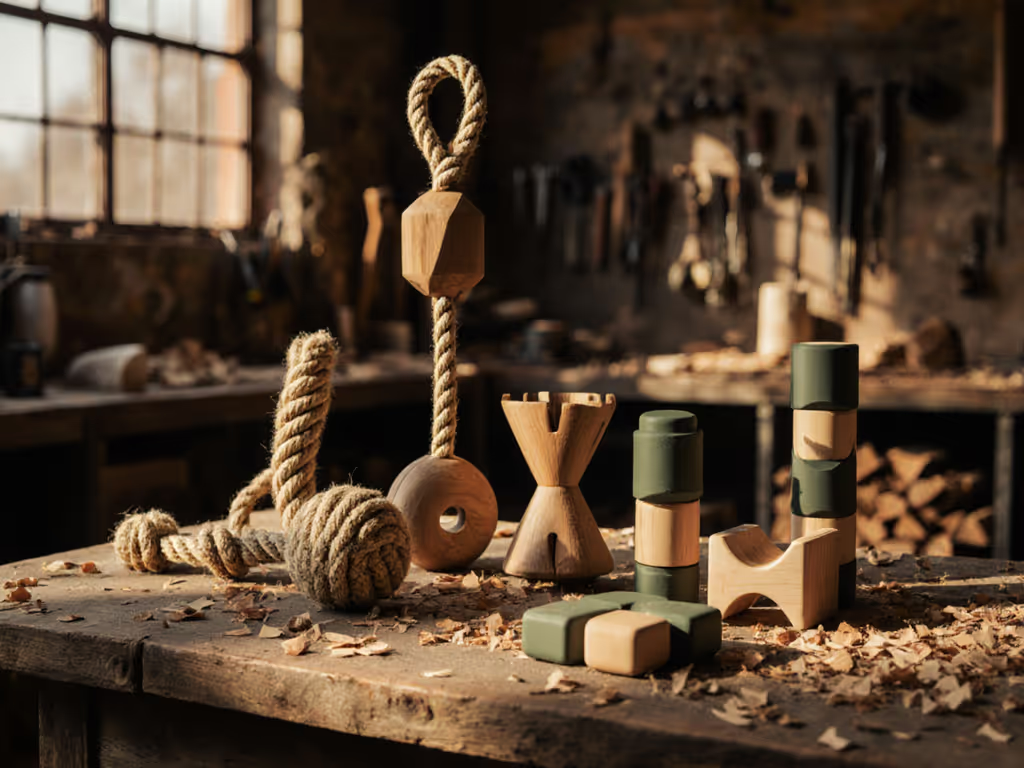
Best 2026 Sustainable Dog Toys: Mycelium, Lab-Grown, Safer Play
By Sanjay Bhatt • 25th May
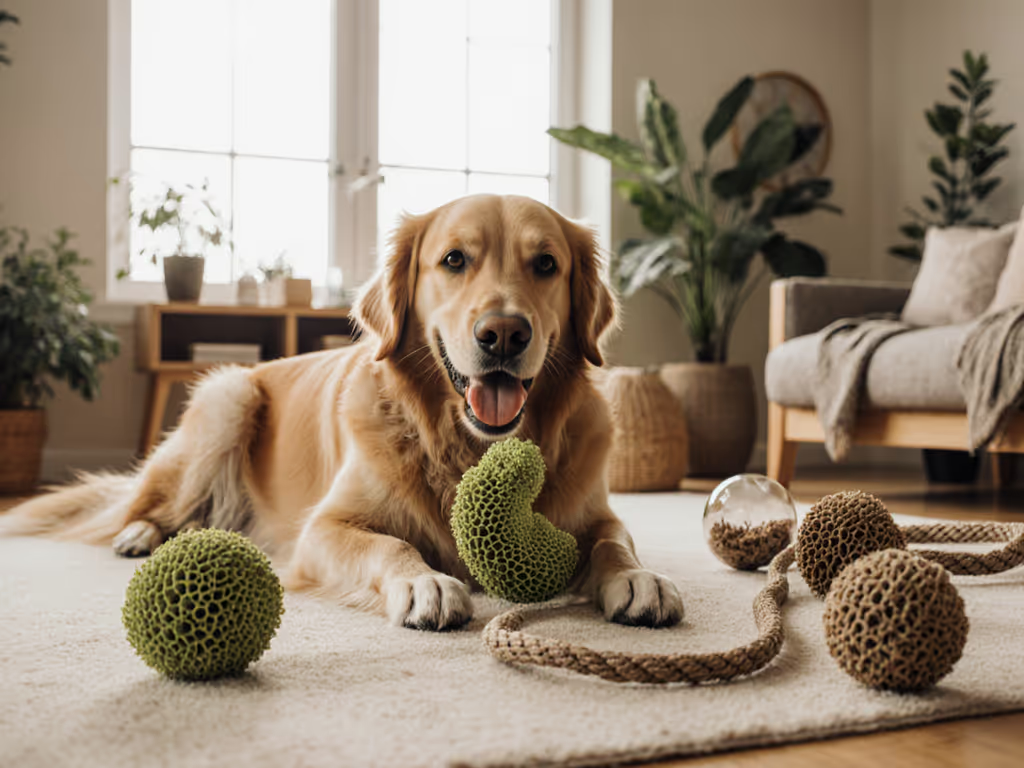
If you are trying to narrow down 2026 sustainable dog toys that are genuinely safer, durable, and still engaging, you are not alone. For a side-by-side breakdown of hemp, algae-based bioplastics, and recycled composites, see our sustainable materials face-off. Guardians are being flooded with claims about innovative eco-friendly materials while still battling shredded plush, swallowed chunks, and toys that die in a single high-arousal zoomie session.
My lens is simple: if a toy survives elevated arousal, stays enriching across multiple sessions, and fails in a predictable, low-risk way, it earns a place on my list. I stress-test in shelter, then recommend for your living room.
--
How I Evaluate Sustainable Dog Toys in 2026
Before comparing material classes and toy types, here is the framework I use across a busy, high-intake shelter and foster network.
Step 1: Define the Dog's Arousal Band and Playstyle
I don't care what the package says; I care what the dog does in its highest arousal band.
Arousal band (working definition):
- Low: Soft mouthing, sniffing, gentle tossing. Puppies or seniors, decompression time, post-walk.
- Medium: Purposeful chewing, active tugging, moderate chasing, but still responsive to cues.
- High: Full-body shaking, sprinting, frantic chewing, repeated impact (slamming, pouncing), toy guarding risk. If your dog guards high-value toys, learn how to safely introduce new dog toys to prevent conflict.
Core playstyles I track:
- Power Chewer: Jaws + persistence. Targets seams, corners, and density changes.
- Methodical Nibbler: Front incisors, edge picking, surgical thread pulling.
- Shredder: Thrashes, un-stuffs, desleeves, and enjoys destruction as the reinforcement.
- Puzzle Solver: Pawing, nosing, object moving; motivated by problem-solving.
- Fetch Junkie: Repetitive retrieve, drop, repeat; cares about mouthfeel and flight more than chewing.
- Snuggler / Comfort Seeker: Carries, rests head on toy, light licking.
Step 2: Standardized Metrics (Playstyle Index)
Every toy category below is scored using an internal Playstyle Index with 1–5 scales:
-
Chew Resistance (CR):
-
1 = fails in under 5 minutes with a typical shelter adult.
-
3 = survives at least three 20-minute sessions with moderate chewers.
-
5 = holds up through a week of daily, high-arousal sessions without structural failure.
-
Enrichment Dose (ED):
-
1 = novelty only; interest fades within minutes.
-
3 = engages for 10–20 minutes with some problem-solving or sensory work.
-
5 = supports repeated, varied use (puzzle, lick, chew, fetch) and stays interesting over weeks.
-
Cleanability (CL):
-
1 = traps grime, not clearly washable, questionable drying.
-
3 = hand-washable with visible access to crevices.
-
5 = clearly dishwasher-safe or machine-washable, fast-drying, minimal dirt-trapping texture.
-
Noise Profile (NP):
-
1 = loud impact and squeakers, bad for apartments.
-
3 = moderate thuds, muffled squeaks.
-
5 = quiet - good for WFH and shared walls.
-
Risk Profile (RP):
-
Low: Predictable wear, large components, low swallowability.
-
Medium: Fraying, moderate chunk potential; requires periodic inspection.
-
High: Small detachable pieces, brittle breakage, or rapid shredding; generally not recommended for unsupervised use.
-
Circularity Score (CS):
-
1 = Mixed materials, landfill-destined.
-
3 = Recycled input or partial recyclability.
-
5 = Designed for disassembly, take-back program, or proven compostable pathway (true circular economy dog products).
I favor overengineered safety margins and proven designs over cute or novel options. Evidence over anecdotes.
Step 3: Stress-Testing Protocol
During peak intake, enrichment rounds start before sunrise. Between kennel cleans I log bite patterns, check seams, measure missing pieces, and record failure mode for every new material class.
Patterns repeat fast:
- Some "eco" textiles shear at the first head-shake.
- Some dense biopolymers glaze over with drool and food residue that never quite scrubs out.
- A few standouts survive a week of back-to-back, high-arousal runs and stay interesting.
The material classes below earned shortlists in that environment.
--
Mycelium-Based Dog Toys: Fungi Forward
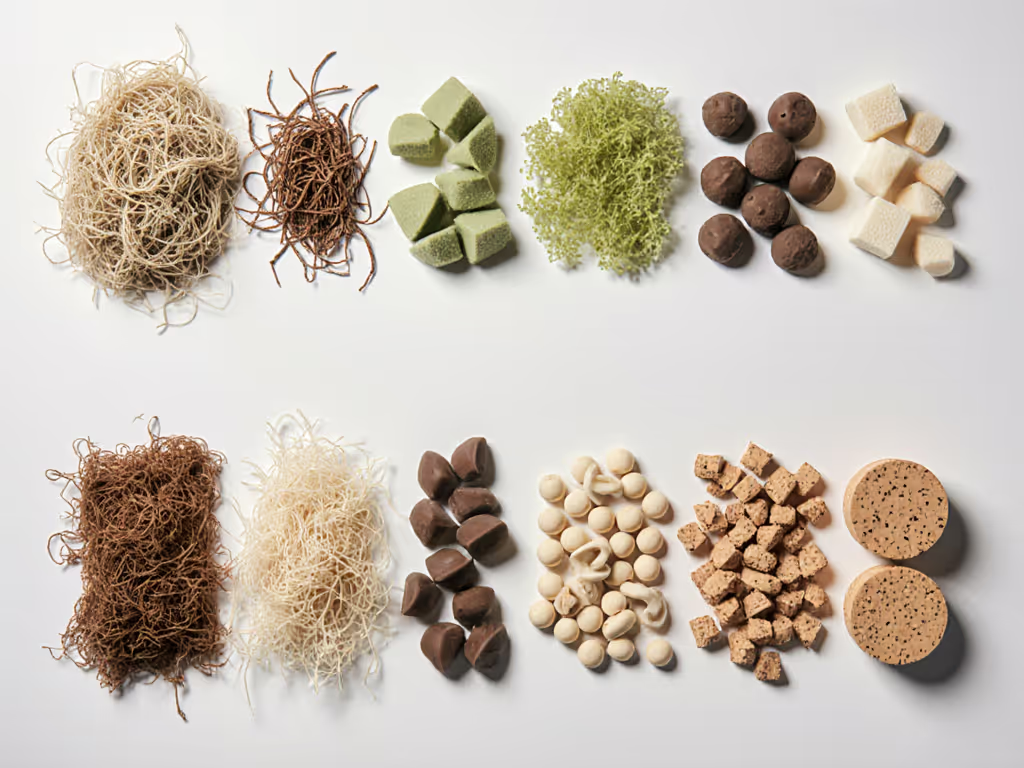
Mycelium-based dog toys are made from the root-like network of fungi, grown on agricultural waste and molded into shapes, then heat-treated to create a light, foam-like or wood-like composite.
Material Class Overview
- Material class: Mycelium composite (fungal mycelium + plant substrate)
- Sustainability profile: Often close to or potentially carbon-negative pet products when grown on local waste under low energy conditions.
- Typical forms:
- Solid chew blocks and bones
- Textured puzzle shells (fillable cavities)
- Lightweight toss disks or tug handles
Strengths:
- Naturally low-density, often pleasantly grippy.
- Can be molded into one-piece structures, minimizing glued seams.
- Excellent at avoiding sharp shatter points; most failures crumble or abrade.
Common failure modes:
- Edge crumbling under power-chewer incisors.
- Layer delamination if the substrate isn't fully bound.
- Surface becoming fuzzy or fibrous with repeated wet/dry cycles.
Mycelium Toy Archetypes & Scores
1. Dense Mycelium Chew Block For moderate chewers who like to park and gnaw.
- CR: 3-4 (good against medium jaws, variable against true power chewers)
- ED: 3 (chew-only enrichment unless paired with scent work)
- CL: 3 (surface wipes clean, but prolonged moisture can degrade structure)
- NP: 5 (nearly silent)
- RP: Medium - crumbles are usually small and soft, but ingestion risk still exists; supervise and retire when chunks exceed pea size.
- CS: 4-5 - often compostable in industrial or well-managed home systems.
Best match:
- Arousal band: Low-medium.
- Playstyles: Methodical Nibbler, moderate Power Chewer.
- Homes: Apartments needing quiet, guardians who can inspect and rotate.
2. Mycelium Puzzle Shell (Fillable) Think of a hollow, textured dome you can smear with soft food and freeze.
- CR: 2-3 (intended more for licking and pawing than full-force chewing)
- ED: 4 (licking, scent, problem-solving when you vary fillings)
- CL: 4 (simple geometry is key; avoid internal ledges and blind corners)
- NP: 5
- RP: Medium - as the shell wears, tooth marks can become fracture lines.
- CS: 4-5
Best match:
- Arousal band: Low-medium.
- Playstyles: Puzzle Solver, Snuggler, anxious dogs needing lick-based settling.
- Goal: Calm, low-mess, freezer enrichment.
3. Lightweight Mycelium Toss Disk
- CR: 2 (edges go first under shredders and power chewers)
- ED: 2-3 (fetch-only engagement)
- CL: 3
- NP: 4 (soft landings; good for shared walls)
- RP: Medium-High with shredders; edges fray into bite-sized pieces.
- CS: 4
Best match:
- Arousal band: Low-medium.
- Playstyles: Fetch Junkie with low chew drive between throws.
- Use: Supervised fetch, not a leave-alone toy.
Recommendation: In 2026, mycelium belongs in your rotation as a supervised, lower-arousal enrichment class, especially in puzzle shells and dense blocks. I do not treat it as a primary outlet for unsupervised power chewers yet.
--
Lab-Grown Material Toys: Bio-Engineering the Future
When we talk about lab-grown material toys, we are usually seeing one of three things:
- Lab-grown collagen or gelatin-like materials used as soft, flexible components.
- Bio-fabricated "leather" analogs grown from cells or microbial cultures.
- Precision-fermented biopolymers - plastics whose monomers come from engineered microbes rather than petroleum.
These materials aim to reduce land, animal, or fossil fuel use while maintaining performance.
In my logs, lab-grown and precision-fermented materials live or die not on novelty, but on their failure mode.
Material Class Overview
- Material class: Lab-grown collagen/gelatin, microbial leather, or fermented biopolymer elastomers.
- Sustainability profile: Lower reliance on livestock or fossil fuels; impact depends heavily on energy mix and manufacturing.
- Typical forms:
- Flexible outer skins on squeaky toys
- Coated tug handles or straps
- Soft, rubber-like chew surfaces
Important boundary: If a product is designed to be eaten (e.g., a fully edible collagen chew), I classify it as a chew, not a toy, and it falls outside this article's scope.
Lab-Grown Toy Archetypes & Scores
1. Bio-Fabricated "Leather" Tug Strap
- CR: 3 (better than many natural leathers; still not a power-chewer solution)
- ED: 3 (tug + light chew + carry)
- CL: 4 (smooth surface, usually wipe-clean)
- NP: 4 (impact noise is low, tug play thuds more than clatters)
- RP: Medium - edge fraying is the common failure; long strips can pose a swallowing hazard if not retired promptly.
- CS: 3-4 (depends on whether backing and stitching are also bio-based or recycled).
Best match:
- Arousal band: Medium-high supervised tug.
- Playstyles: Tugger, Shredder (under tight supervision; retire at first long strip).
2. Fermented Biopolymer Chew Rings
These are rubber-like rings where the base polymer comes from microbes.
- CR: 4 (when properly formulated, they rival premium synthetic rubber)
- ED: 3-4 (chew + fetch + carry; can double as a handle for human-guided games)
- CL: 5 (closed-ring geometry, dishwasher-safe in many designs)
- NP: 4 (soft impact vs hard plastics)
- RP: Low-Medium - wear tends to be gradual, with abrasion rather than shards.
- CS: 3-4 (bio-based feedstock plus potential recyclability).
Best match:
- Arousal band: Medium-high.
- Playstyles: Power Chewer (moderate), Fetch Junkie, multi-dog tug.
Takeaway: Among innovative eco-friendly materials, precision-fermented biopolymers are the most promising for true working-chewer duty in 2026, provided the brand publishes real testing data and clear retirement criteria.
--
Advanced Recycled & Circular Plastics: Old Workhorse, New Rules
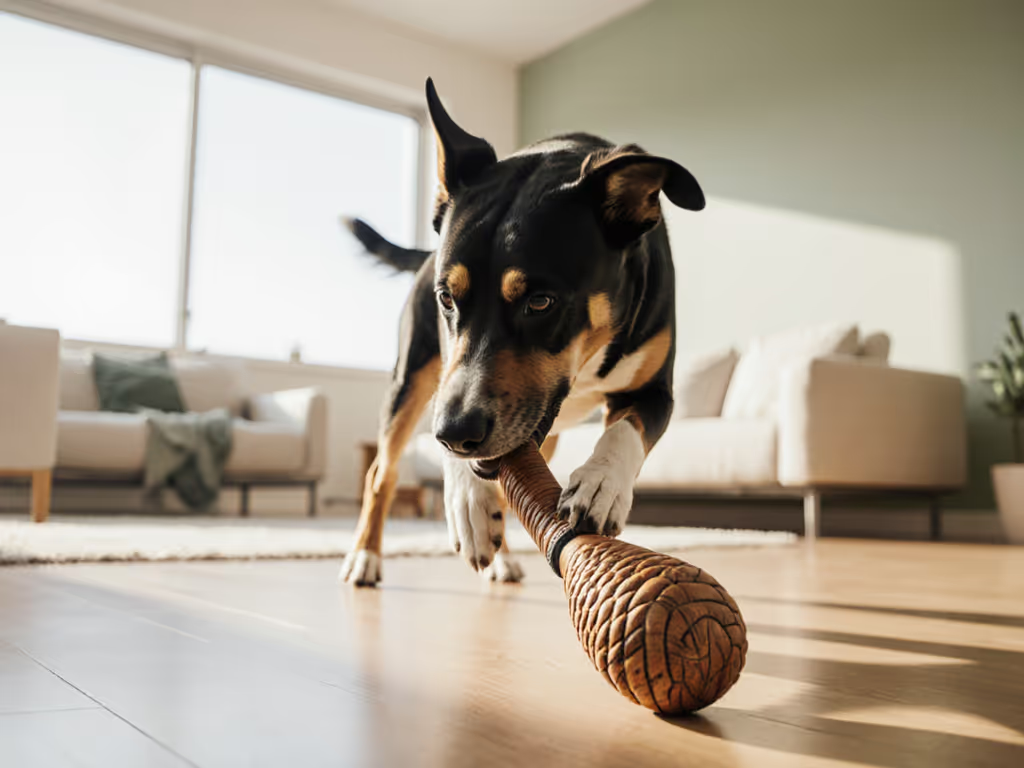
The most mature "green" category is recycled and circular plastics: recycled ocean plastics, post-consumer HDPE, and TPE blends designed to be re-ground and remolded.
These are rarely carbon-negative by themselves, but they can drastically reduce virgin plastic use and fit well into circular economy dog products when take-back programs exist.
Material Class Overview
- Material class: Recycled HDPE, PP, PET, and TPE elastomers.
- Sustainability profile: Significant reduction in virgin feedstock; long life span reduces replacement frequency.
- Typical forms:
- Solid chew toys and bones
- Fillable treat toys and puzzles
- Discs and fetch balls
Recycled Plastic Archetypes & Scores
1. Solid Recycled Chew Bone
- CR: 4-5 (depending on thickness and design)
- ED: 2-3 (chew + carry; can be paired with scent or chew sessions after training)
- CL: 5 (smooth, non-porous, clearly washable)
- NP: 3 (thuds on hard floors; choose softer TPE blends for apartments)
- RP: Medium - some designs produce sharp wear points under extreme chewing; I retire at the first sharp edge.
- CS: 3-4 (recycled input; some brands offer take-back).
Best match:
- Arousal band: Medium-high.
- Playstyles: Power Chewer, Fetch Junkie between chews.
2. Recycled Treat-Puzzle Toy (Fillable)
- CR: 4 (the failure is usually cosmetic scuffing rather than structural)
- ED: 5 (variable difficulty, freezer use, scatter feeding, sniff-and-roll)
- CL: 4-5 (dishwasher-safe when labeled; avoid complicated internal fins you can't see into)
- NP: 3-4 (rolling impact noise; moderates with rugs or mats)
- RP: Low - one-piece molds without insertable small parts perform best.
- CS: 3-4.
Best match:
- Arousal band: Low-high, depending on how you set difficulty.
- Playstyles: Puzzle Solver, Power Chewer (supervised), anxious dogs needing food-based engagement.
Practical tip: If you only buy one toy class in 2026, make it a recycled or bio-based treat-puzzle with a simple, inspectable cavity. It consistently returns the highest enrichment dose per dollar in my logs.
--
Natural Rubber 2.0 and Bio-Based Elastomers
Natural rubber toys are not new, but 2026 brings better traceability: FSC-certified plantations, bio-based TPU blends, and clearer additive disclosure. For brand-specific durability data, see our Kong vs West Paw rubber test.
Material Class Overview
- Material class: Natural rubber, often blended with bio-based or reduced-fossil elastomers.
- Sustainability profile: Renewable feedstock; impact depends on plantation practices and processing.
- Typical forms:
- Bouncy balls
- Fillable cones and cylinders
- Tug rings
Rubber Archetypes & Scores
1. Thick-Walled Rubber Treat Cone
- CR: 4-5 (a benchmark for many power chewers)
- ED: 5 (stuffing, freezing, sniffing, chewing; supports layered enrichment)
- CL: 4 (top-rack dishwasher-safe in many cases; always confirm)
- NP: 3 (bounces and floor impact can be loud in apartments)
- RP: Low - wear is gradual; outer layer can fuzz before chunks appear.
- CS: 3-4 (bio-based, long-lived; some brands exploring take-back).
Best match:
- Arousal band: Low-high.
- Playstyles: Nearly all except intense Shredders who go after fabric.
2. Bio-Based Rubber Tug Ring
- CR: 4 (strong tug, moderate chew)
- ED: 3-4 (tug, fetch, carry, social play between dogs)
- CL: 5 (simple geometry, hose-or-dishwasher clean)
- NP: 4 (soft landings, minimal clatter)
- RP: Low-Medium - monitor for thinning at the inner arc.
- CS: 3-4.
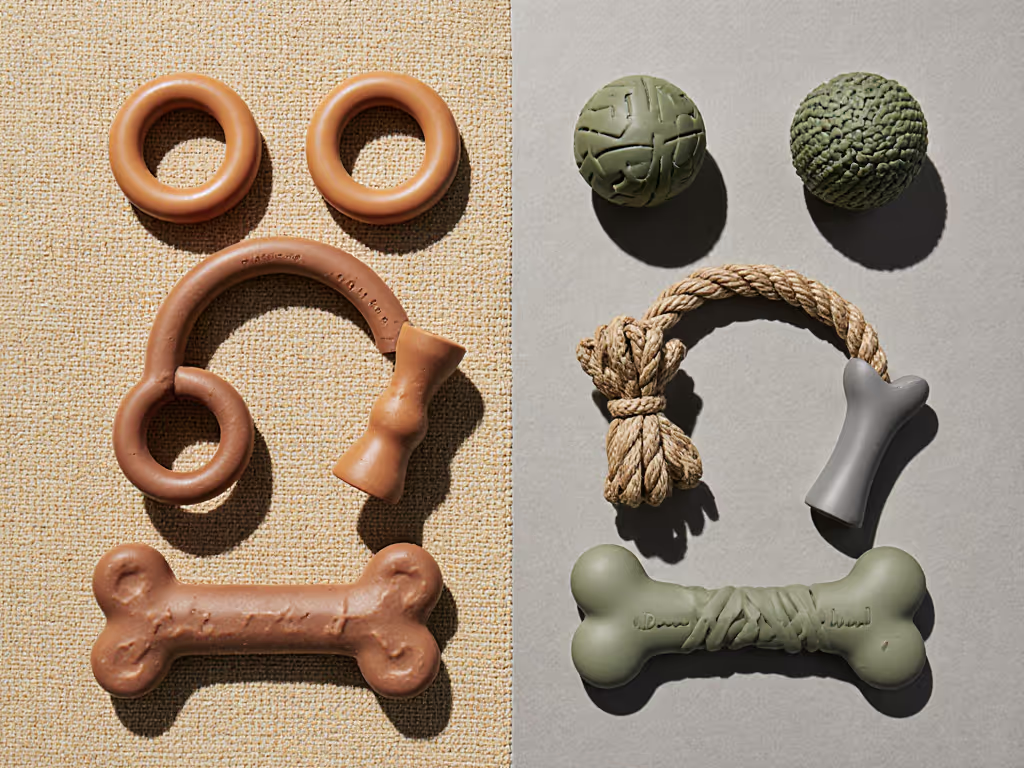
In high-arousal shelter playgroups, the rubber tug ring class consistently survives multi-dog chaos with easily readable wear, which is why it's one of the few items I rotate between kennels when disinfected appropriately.
--
Textile Hybrids: Recycled & Bio-Based Fabrics
Textile toys are where most eco-branding happens, and where most of my early retirements come from.
Material Class Overview
- Material class: Recycled PET fabric, organic cotton, hemp blends, occasionally combined with bio-based foams.
- Sustainability profile: Diverts plastic from waste streams; plant fibers can be lower impact than synthetics.
- Typical forms:
- Plush toys with or without stuffing
- Tug ropes and flat tugs
- Crinkle or squeak mats
Textile Archetypes & Scores
1. Recycled Fabric Flat Tug (No Stuffing)
- CR: 2-3 (fine for light–moderate tuggers; fails fast with shredders)
- ED: 3 (tug + light chew + scent game if you hide it)
- CL: 4 (machine-washable when hardware is minimal)
- NP: 4 (quiet)
- RP: Medium-High - threads and strips can be swallowed; supervision is mandatory.
- CS: 4 (high recycled content; end-of-life still likely landfill unless take-back exists).
2. Recycled Plush Comfort Toy (Minimal Squeakers)
- CR: 1-2 (not for chewers)
- ED: 2-3 (comfort, light play, scent-carrying)
- CL: 3-4 (washable, but stuffing can clump)
- NP: 5 (ideal for quiet environments)
- RP: Medium - high risk in the wrong mouth; I keep these out of high-arousal bands entirely.
- CS: 4.
In the shelter, I reserve textile hybrids for low-arousal, supervised comfort time (post-surgery rest, decompression for shutdown dogs, or very light-mouthed seniors). They don't earn general population status with power chewers.
--
Side-by-Side Comparison: Material Classes in 2026
| Material Class | Best For (Dog & Use) | CR (1–5) | ED (1–5) | CL (1–5) | NP (1–5) | CS (1–5) | Typical Risk Profile |
|---|---|---|---|---|---|---|---|
| Mycelium Composite | Low-medium arousal, lick/puzzle, quiet homes | 2-4 | 3-4 | 3-4 | 5 | 4-5 | Medium (crumbling, chunks) |
| Lab-Grown / Fermented Biopolymers | Moderate power chewers, tug/fetch, multi-dog play | 3-4 | 3-4 | 4-5 | 4 | 3-4 | Low-Medium |
| Recycled / Circular Plastics | Daily chews, treat puzzles, apartment-friendly fetch | 4-5 | 4-5 | 4-5 | 3-4 | 3-4 | Low-Medium |
| Natural Rubber & Bio Elastomers | High-arousal enrichment, freezer toys, power chewers | 4-5 | 4-5 | 4-5 | 3-4 | 3-4 | Low |
| Recycled / Bio Textile Hybrids | Comfort, light tug, scent play | 1-3 | 2-3 | 3-4 | 4-5 | 4 | Medium-High (threads) |
Ranges reflect real-world variance between brands and designs within a material class.
--
Matching Your Dog to 2026 Sustainable Toy Classes
This is where most guardians save money and reduce risk: matching toy material class and design to the dog's profile, not the marketing label.
1. Power Chewer (Medium-High Arousal)
Primary toy classes:
- Natural rubber / bio-based treat cones and tug rings.
- Fermented biopolymer chew rings and solid bones.
- Recycled plastic chew bones (only thicker, one-piece models).
Avoid as primary outlets:
- Mycelium toss disks, textile plush, and thin fabric tugs.
Goal: Provide 1–2 high-CR toys per day that can be safely used unsupervised for defined windows, plus supervised variety for enrichment.
2. Puzzle Solver / Easily Bored Dog
Primary toy classes:
- Recycled or rubber treat-puzzle toys with variable difficulty.
- Mycelium or rubber lick/puzzle shells for fill-and-freeze.
Why: These dogs benefit from high ED more than extreme CR. A less-durable puzzle used under supervision can be safer and more effective than a chew brick that offers no cognitive work.
3. Shredder (Fabric-Focused)
Primary strategy:
- Offer sacrificial, low-risk textiles under close supervision (e.g., sturdy flat tugs) and control the arousal band with short sessions.
- For unsupervised times, stick with high-CR rubber or recycled plastic toys.
Key rule: Shred-based reinforcement should live in your structured play windows, not in the crate or alone time.
4. Snuggler, Seniors, and Softer Mouths
Primary toy classes:
- Mycelium or rubber lick mats and puzzle shells.
- Recycled plush comfort toys (only if the dog has a proven gentle mouth).
- Light, bio-fabricated tug/comfort straps for interactive play.
Goal: Emphasize low RP, soft mouthfeel, and high ED in the form of licking, sniffing, and gentle carry, not jaw load.
--
Noise, Mess, and Cleaning: Apartment Reality Check
When I assign toys to small, shared-space homes, I filter by three practical dimensions.
Noise
- Quietest (NP 4-5): Mycelium blocks and puzzle shells, rubber/bio-based rings, textile comfort toys.
- Moderate (NP 3-4): Recycled treat puzzles, rubber cones on carpet or mats.
- Loudest (NP 1-2): Hard plastic balls and discs on bare floors, multi-squeaker textiles.
Mess
- Low-mess: Smooth rubber, biopolymer rings, simple-geometry recycled puzzles.
- Manageable: Mycelium puzzle shells (if you control moisture), washable textiles used with dry scent work.
- High-mess: Overstuffed plush, toys with loose fibers, or fillable designs with inaccessible corners.
Cleanability
When you read packaging, look explicitly for:
- Dishwasher-safe marking for hard toys.
- Machine-washable status for textiles.
- Simple, visible interior geometry with no blind crevices.
If you cannot clearly see or reach every surface that touches wet food or saliva, treat it as higher risk and limit it to dry treats or short, supervised windows. For cleaning schedules and methods by material, use our toy cleaning guide.
--
Transparent Safety Notes and Retirement Rules
Every sustainable toy in 2026 should come with clear guidance on when to retire it. In our shelter protocols, we standardize retirement triggers across material classes:
- Any toy that sheds pieces larger than a pea is removed immediately.
- Any exposed internal layer (foam, filler, secondary substrate) is treated as a failure.
- Any sharp edge that catches on a glove or skin is an automatic retire.
- Any toy with persistent odor or visible residue after cleaning is demoted to training-only or discarded.
If it survives stress and stays engaging, it's worth your trust.
When you bring these standards home, you gain two things: fewer emergency vet risks and better ROI on each purchase, because you are picking toys designed to fail safely and predictably. When a toy reaches end of life, follow our dog toy recycling guide to dispose of it responsibly.
--
Summary and Final Verdict: Building Your 2026 Sustainable Toy Kit
Pulling the data together, here is how I'd structure a minimal, high-yield toy kit for an average urban or suburban dog, using the best of 2026's sustainable materials:
- One high-CR rubber or fermented biopolymer treat cone
- Role: Daily brain work (fill-and-freeze), crate settling, impulse-control drills.
- Why: Top-tier ED and CL, stable RP.
- One recycled or circular plastic treat-puzzle
- Role: Sniff-and-roll meals, solo engagement, adjustable difficulty.
- Why: High ED, solid CR, good for multi-dog homes when used with management.
- One bio-based rubber or biopolymer tug ring
- Role: High-arousal outlet with rules, shared play between dog and humans (or well-matched dogs).
- Why: Durable social play, moderate noise, easy cleaning.
- One mycelium or textile comfort/puzzle item (supervised)
- Role: Lick-based calming, decompression, comfort carries.
- Why: Adds sensory variety, supports low-arousal enrichment.
- Optional: One carefully chosen textile comfort toy
- Role: For soft-mouthed, low-arousal dogs only.
- Why: Emotional comfort, scent carrier (you can store it with your clothing for added value).
If your dog is a confirmed power chewer or Shredder, skew toward rubber and recycled/circular plastics and reserve mycelium and textiles strictly for structured, supervised sessions.
When you evaluate any new entrant in the 2026 sustainable dog toys market, run it through this checklist:
- Does the material class and design match my dog's arousal band and playstyle?
- Can I predict the failure mode, and am I comfortable with it?
- Is there a clear cleaning pathway (dishwasher/machine-washable and inspectable)?
- Do I understand the retirement criteria just by looking at the toy?
- Does the brand provide real information about innovative eco-friendly materials, not just leaf icons and buzzwords?
If a toy passes those tests, I don't care whether it is mycelium, lab-grown, or recycled. Under high-arousal testing, it will earn its place. And if it doesn't, it won't last a week in my logs, let alone in your living room.
Related Articles