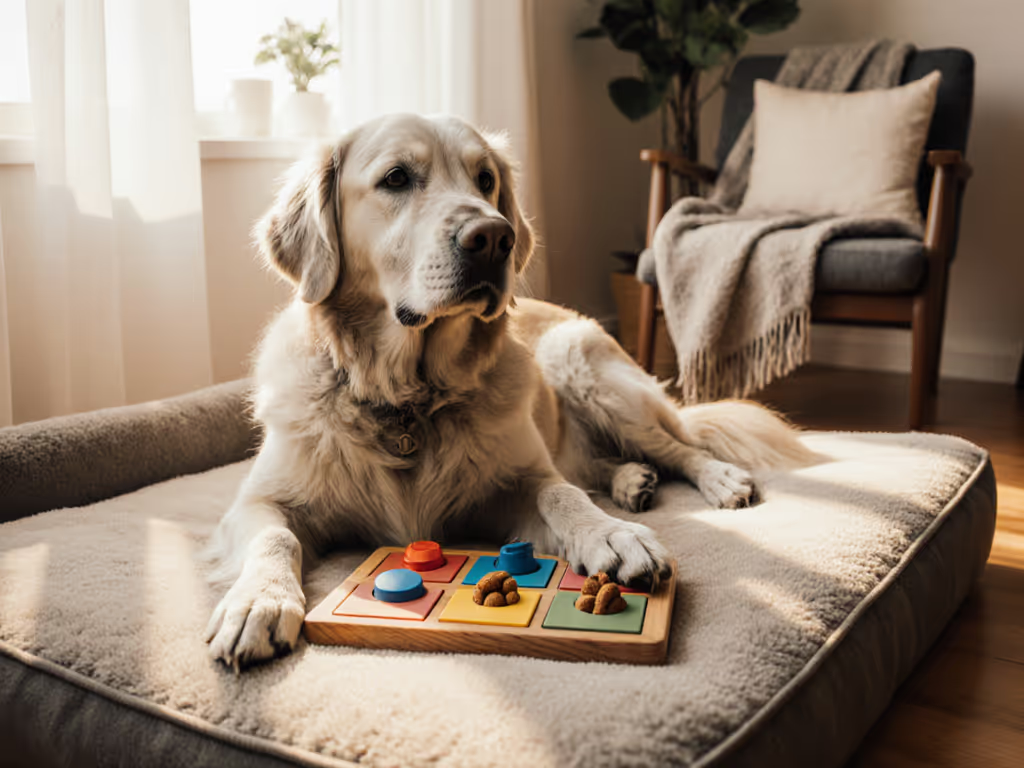
Stress-Free Dog Sports Training Equipment Guide
By Alma Rivera • 5th Dec
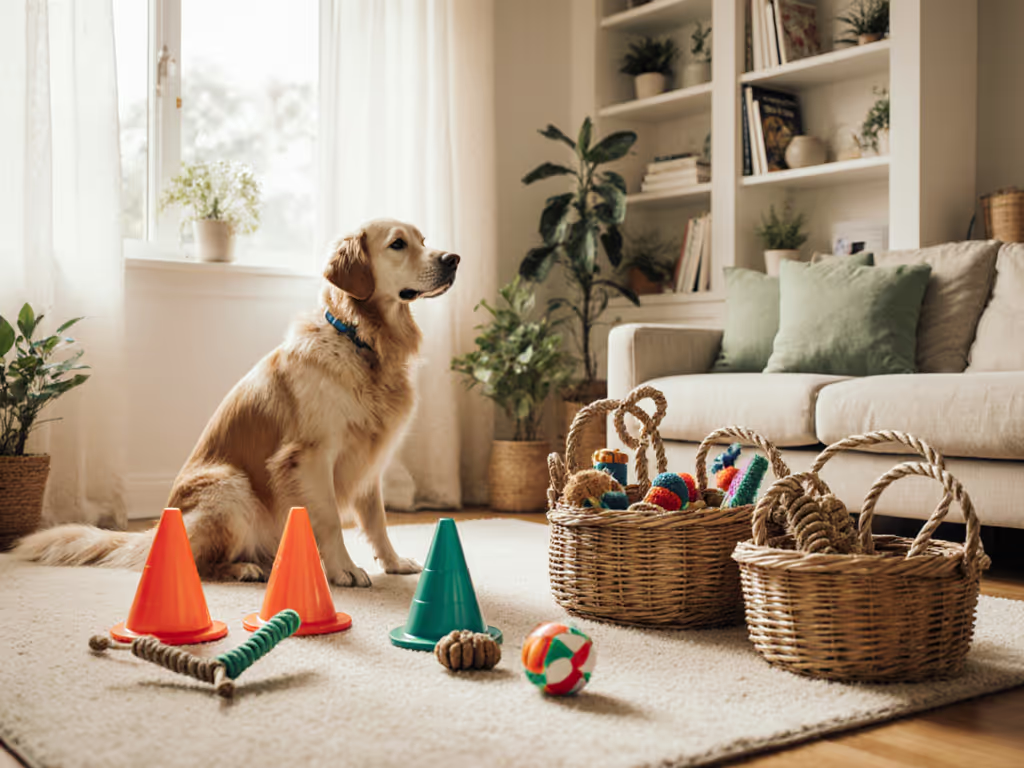
Let's face it: your home isn't an arena, and your greatest agility competitor is often the neighbor's sleep schedule. Yet finding the right dog sports training equipment that aligns with your living space, while still delivering mental and physical benefits, is entirely possible. Forget flashy setups that demand constant supervision or leave your floors scattered with stuffing. As someone who's tuned enrichment plans for thin-walled apartments and WFH households, I'll show you how to choose the best dog toys and gear that prioritize quiet brains over loud rooms. Because great enrichment should fit your household's rhythm, not fight it.
Why "Standard" Dog Sports Gear Often Fails at Home
Most commercial dog sports equipment glosses over real-world constraints. That thunderous teeter-totter? It shatters concentration in open-plan homes. Foam tunnels shedding crumbs? Nightmare for hardwood floors. And power-chewers demolishing nylon weave poles in minutes? A costly lesson. Your pain points aren't about lack of effort... they're about mismatched gear. Home-friendly sport-specific dog play requires auditing three silent dealbreakers first:
Phase 1: Your Non-Negotiable Home Constraints Audit
Before eyeing a single piece of agility training toys, objectively rate your space's limits using these metrics:
- Noise Profile: Measure decibel levels during typical play (apps like Decibel X work). >65dB disrupts Zoom calls and neighbor relations. Tip: Test toys at night when ambient noise is lowest.
- Mess Index: Rate potential debris on a 1-5 scale (1=zero crumbs, 5=stuffed-fiber avalanches). If it scores >3, skip it, your vacuum won't thank you.
- Supervision Load: Estimate active monitoring time per session. "Low" = <10% of playtime (e.g., while folding laundry); "High" = near-constant focus (like teaching contact zones).
Quiet brains beat loud rooms: design enrichment around life.
This audit exposes why flashy gear fails. That $200 A-frame? Likely a "High" supervision load with a 70dB+ noise profile. I learned this during midnight trials with a herding foster, and some solutions were washable and quiet enough to run while I answered emails.
Phase 2: Match Sport to Dog's Energy (Without the Chaos)
Skip forcing sports that clash with your home rhythm. Use this vetted framework:
| Sport Type | Best For | Home-Friendly Swap | Why It Works For Apartments |
|---|---|---|---|
| Obedience Trials | High-focus dogs needing calm | Textured pause mats | Near-silent; mess index = 1 |
| Agility | High-energy breeds | Low-bar jumps + flat weave mats | Noise profile <60dB |
| Dock Diving | Water-loving retrievers | Indoor splash pads | Zero splatter outdoors |
| Disc Sports | Precision-driven athletes | West Paw Zogoflex Zisc discs | Soft landing; floats quietly |
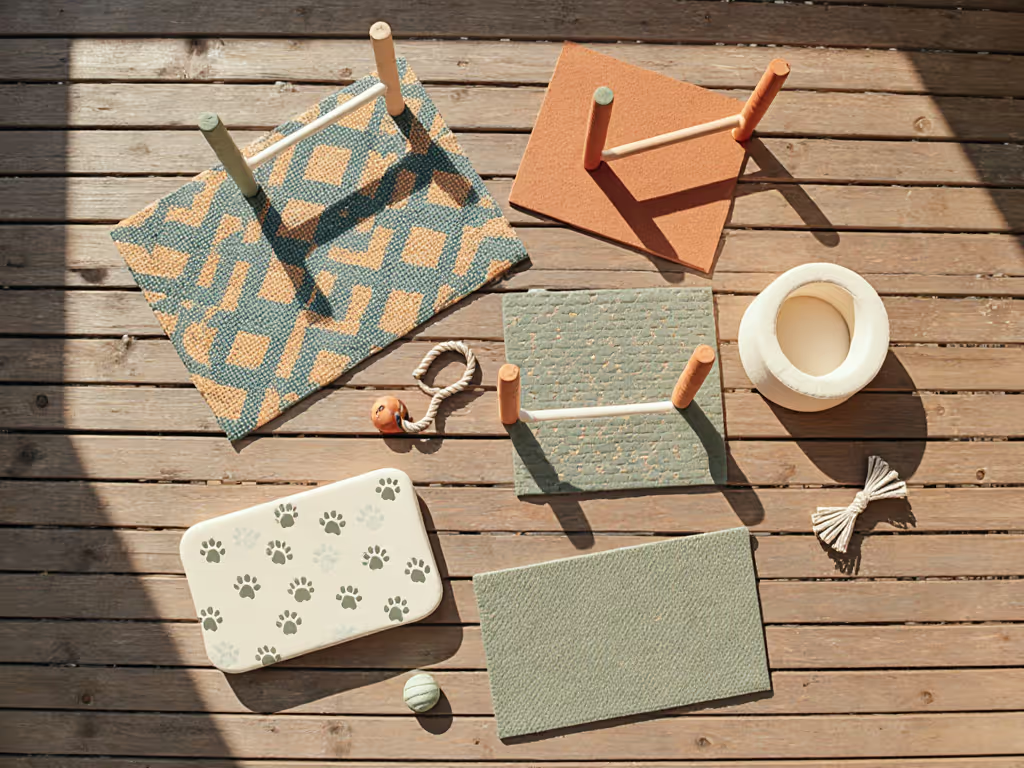
Notice the swaps aren't "less" sports, they're smarter adaptations. If you're weighing rubber discs and chews, see our Kong vs West Paw durability test for quiet, apartment-safe picks. For example, ditching tall weave poles for flat-pattern snuffle mats (like a wobble board base) maintains precision training while slashing noise.
Phase 3: Evaluate Equipment Using Home-Friendly Metrics
Now apply your audit to actual gear. Forget "indestructible" claims, demand these proof points:
Critical Filters For Urban & Shared Living
- Washability = Longevity
- Seek gear surviving 5+ dishwasher cycles (e.g., rubber pause tables). Avoid nooks trapping bacteria. For material-specific sanitizing schedules and methods, use our cleaning dog toys guide.
- Red flag: "Spot clean only" instructions for high-contact surfaces.
- Decibel-Tested Quietness
- Lightweight PVC jumps (like PawHut Adjustable Sets) register 10dB lower than wooden frames. Test by dropping a ball onto the gear, shouldn't echo. If noise is a concern, compare near-silent options in our quiet dog toys guide.
- Supervision load: low for tunnels with sandbag anchors (no chasing loose ends).
- Zero-Debris Materials
- Solid rubber chew toys > plush with squeakers. Look for "no fill" construction.
- Pro tip: Place dock diving equipment on rubber mats to trap stray water droplets.
- Setup Time Under 5 Minutes
- Collapsible agility gear (e.g., Hyper Pet K9 Kannon Pro launchers) stores flat. No assembly = less frustration during spontaneous sessions.
I prioritize these over "maximal stimulation", a quiet, washable puzzle toy often tames anxiety better than a noisy teeter-totter. Always ask: "Will this work at 2 a.m. in my studio apartment?"
Phase 4: Build Your Low-Stress Rotation System
Equipment choice is only step one. Sustain engagement without burnout:
-
The 3-Box Rule: Rotate gear weekly between "active," "quiet," and "wait" boxes. Example:
-
Active: Low-bar jumps (supervision load: medium)
-
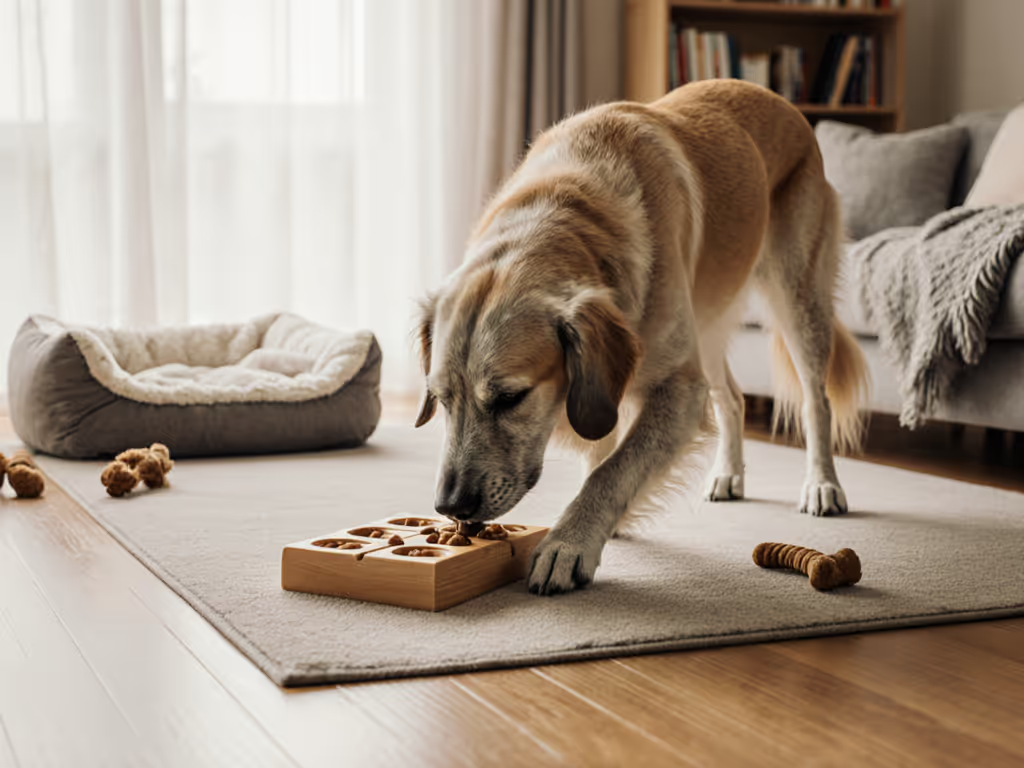
Quiet: Obedience trial scent mats (wash cycles: daily)
-
Wait: Teeter-totter (for yard visits only)
-
Time-Boxed Sessions: 8-12 minutes max for high-drive dogs. Use phone timers to avoid overstimulation.
-
Anchor to Household Rhythm: Pair 5-minute weave pole practice with your coffee break. Sync obedience drills to podcast episodes.
This system prevents wasted money on single-use toys. To set up a low-stress rotation, follow our toy rotation system. In multi-dog homes, I use color-coded gear (e.g., blue for gentle players, red for power-chewers) to avoid resource guarding, without constant supervision. For conflict-free introductions, use our resource guarding toy guide.
Final Thought: Enrichment That Respects Your Home
Choosing dog sports training equipment isn't about replicating competition venues. It's about crafting moments where your peace and your dog's needs coexist. Test gear at your actual noise thresholds. Demand real-world washability proof. And remember: a 60-second snuffle mat session that happens daily beats one chaotic agility run that disrupts your entire week.
Your Actionable Next Step: Tonight, measure your loudest current toy's decibel reading. If it exceeds 65dB, swap it tomorrow for a flat-surface alternative (like a textured obedience mat). Small shifts create sustainable joy, one quiet, washable, low-supervision victory at a time.
Related Articles