Puzzle Toys for Senior Dogs Tested: Low-Impact Picks
By Maya Okafor • 23rd Feb
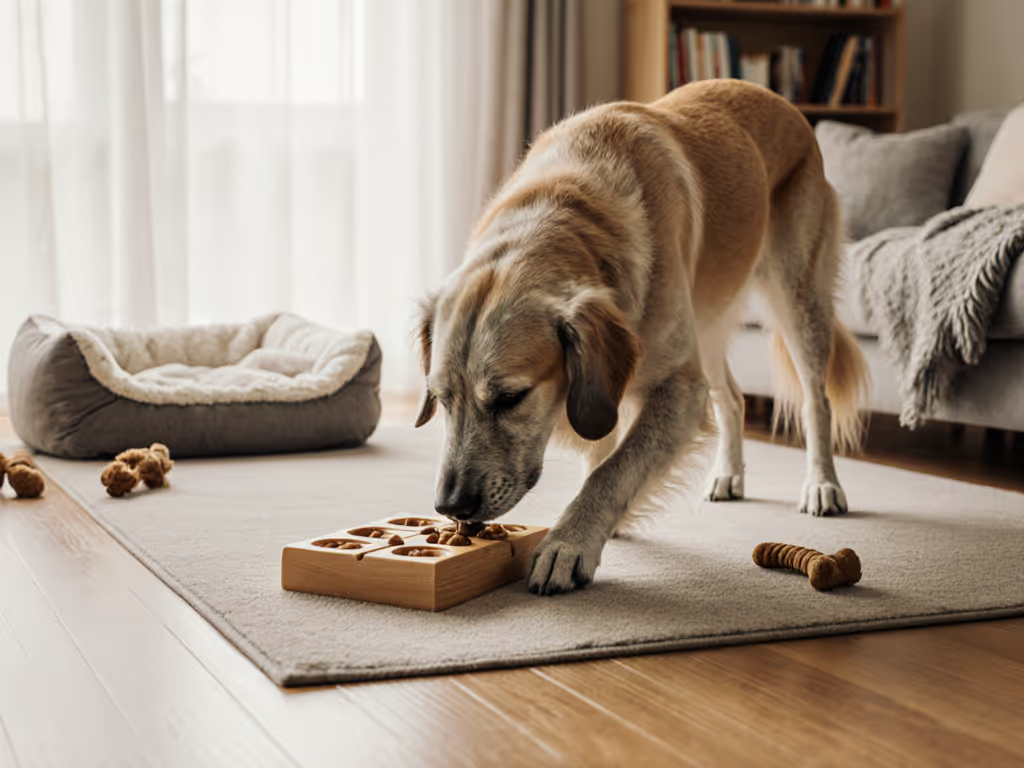
Selecting the right senior dog enrichment toys means matching puzzle design to joint health, cognitive need, and cleanup reality. Over years managing fosters with mobility limits, I've tested dozens of low-impact treat dispensing toys and learned that the costliest picks aren't always the smartest ones (especially when you track minutes of mental engagement per dollar spent and the time you'll spend mopping afterward).
Why Puzzle Toys Matter for Aging Dogs
Older dogs don't hibernate; they need cognitive stimulation for seniors as much as younger dogs, often more. Joint pain and reduced stamina rule out fetch and chase, but a well-chosen puzzle toy can occupy a senior's mind for 15-30 minutes with zero impact on arthritic hips or weak teeth. Research confirms that mentally engaging toys reduce boredom-driven anxiety and destructive behavior while supporting confidence in dogs facing mobility loss. [1] For targeted strategies, see our evidence-based cognitive support toys for senior dogs.
The secondary benefit matters equally in multi-pet or apartment households: quiet matters. Puzzle toys eliminate squeaking, skittering, and repetitive demand barking (the acoustic penalties of bored seniors pacing or whining). That silence is genuinely worth measuring.
Step 1: Profile Your Senior's Chew Strength and Jaw Health
Before any purchase, establish a baseline.
Assess jaw capacity:
- Can he chew soft treats whole, or do they need to be cut into quarters?
- When he gnaws a rubber toy, does his jaw close without trembling?
- Has a vet flagged loose teeth, tartar buildup, or gum recession?
Map playstyle preference:
- Is he a licker (soft muzzle contact, minimal pressure)?
- A pawer (nudges and bats at objects)?
- A mild chewer (gums more than chomps)?
- A manipulator (rolls toys with his nose and front legs)?
This profile determines which puzzle design fits without injury risk. A dog with compromised gums should never face hard plastic or bone-like materials. [1] One that paws gently suits different mechanisms than a dog who bites and worries toys.
Cleanability check: Note whether he drools heavily, has allergies requiring frequent mouth cleaning, or leaves wet food residue. High-drool seniors demand fully dishwasher-safe puzzles (crevices trap bacteria and mold otherwise). Get step-by-step methods in our dog toy cleaning guide.
Step 2: Evaluate Puzzle Type by Engagement Length and Cleanup Cost
Not all puzzle toys deliver equal value. For cross-category picks and sizing tips, see our treat-dispensing toys comparison. Frame each option against price-to-playtime math and cleanup minutes.
Low-Barrier Entry: Soft-Material, Single-Action Toys
These suit seniors with minimal chew drive and moderate arthritis. [1]
KONG Rubber Dog Chew Toy (stuffed with soft treats or kibble mixed with peanut butter):
- Engagement window: 10-15 minutes
- Cleanup cost: 2 minutes (rinse, or dishwasher safe)
- Durability: 1-2 years if not a power chewer
- Mess index: Medium (spread food attracts ants if left on carpets; freeze to contain)
- Joint impact: Zero; stationary enrichment
- Price-to-playtime: Strong for budget-conscious guardians; under $15 and reusable
The gentle rubber formula doesn't sharpen when chewed and flexes under weak bite force. [1] Stuff it with treats or kibble to extend engagement. Freezing extends playtime 5-10 minutes and reduces mess by containing spread food.
Mid-Tier Challenge: Rolling or Wobbling Puzzles
These reward gentle nudging without requiring strength or jaw closure. [2]
Starmark Bob-A-Lot Interactive Puzzle:
- Engagement window: 15-25 minutes
- Cleanup cost: 3 minutes (slots require rinsing to remove kibble dust)
- Durability: 2-3 years; heavily weighted base prevents tipping
- Mess index: Low if filled with kibble; moderate if using wet food
- Joint impact: Minimal; encourages pawing and gentle nudging over strenuous chewing
- Key feature: Two adjustable openings let you increase difficulty as your dog improves, sustaining engagement over weeks
- Price-to-playtime: $25-35; strong ROI for multi-dog homes because it doesn't roll away or require chase
Seniors with mild arthritis in the rear legs benefit from its stationary weight and gentle challenge mechanics. [2] The wobble-release design suits pawers and nose-nudgers more than chewers.
Play9 Roolo:
- Engagement window: 12-18 minutes
- Cleanup cost: 2 minutes
- Mess index: Very low (treats shuffle inside, contained)
- Joint impact: Zero; purely stationary nudging
- Unique trait: Erratic, unpredictable movement across the floor engages prey drive without requiring jumping
- Best for: Seniors with rear-leg or hip pain; low-mobility apartments
For fosters in tight spaces, the Roolo's contained treat movement (audible but not spilled) makes it ideal for noise-sensitive environments.
Advanced Brain Game: Multi-Step Puzzles
These suit cognitively sharp seniors without mobility loss. [2][3]
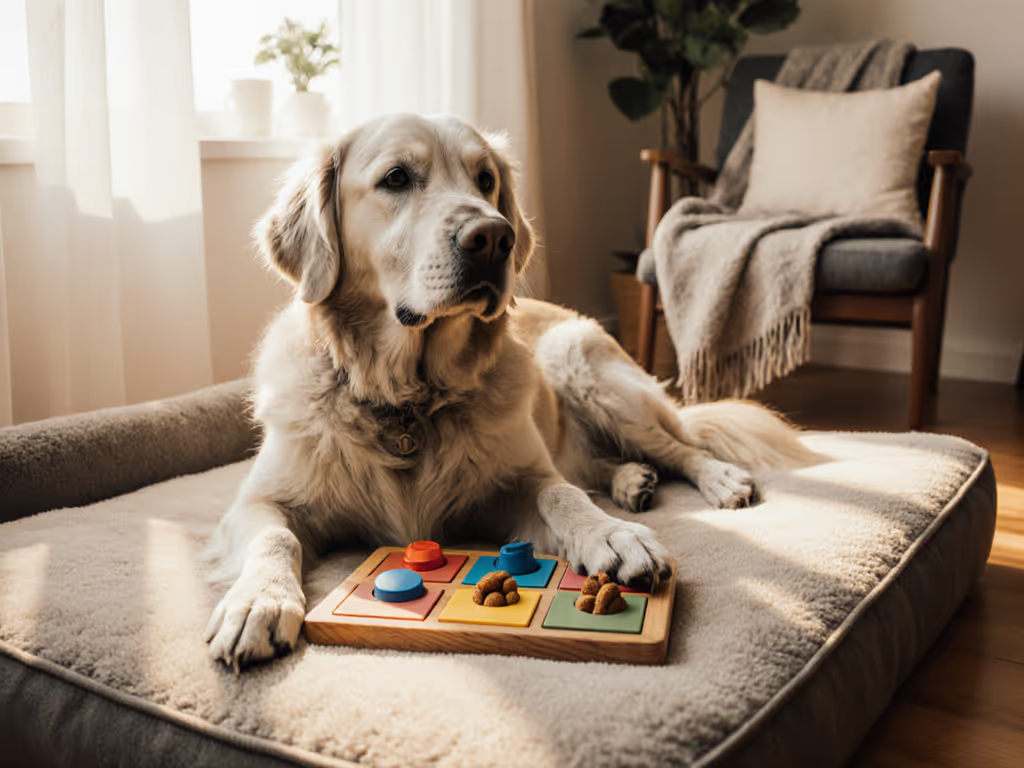
Kanoodle by Brightkins:
- Engagement window: 20-30 minutes (with larger size and partial fill)
- Cleanup cost: 4 minutes (rotating lids and shallow compartments; dishwasher-safe)
- Durability: 2-3 years; composite material won't splinter or crack
- Mess index: Very low (enclosed treats, rubber feet prevent sliding)
- Difficulty scale: Small (19 compartments, no loose pieces) or large (46 compartments, 3 removable pieces — choose small if your dog is a swallower)
- Joint impact: Gentle; mostly nose and paw work
- Price-to-playtime: $35-45; significant upfront cost, but flexibility sustains novelty as your dog improves
The rotating lids and customizable fill allow you to increase difficulty without buying new toys (a hidden win for multi-dog homes and fosters rotating through playstyles). [2]
Nina Ottosson Puzzles (multiple levels):
- Engagement window: 15-25 minutes depending on level
- Durability: 2-3 years; tested extensively in shelters and foster networks
- Cleanup cost: 3-5 minutes (composite-material versions are easier to clean than wood)
- Mess index: Low to moderate (smaller compartments mean fewer escaping kibbles)
- Key strength: Tiered difficulty (Level 1, 2, 3) lets you match challenge to cognitive decline (start simple, upgrade as arthritis worsens and stimulation need stays constant) [3][7]
- Best for: Seniors whose joint pain worsens over months or years; a one-toy solution across life stages
- Price-to-playtime: $20-40 per puzzle; owning two levels (1 and 2) costs less than rotating novelty toys
Step 3: Build a Senior-Safe Enrichment Rotation
Single toys lose novelty fast. A rotating schedule sustains engagement without waste.
Weekly rotation strategy:
- Monday-Tuesday: Frozen KONG (soft, familiar, lowest barrier)
- Wednesday-Thursday: Roolo or Bob-A-Lot (wobble novelty without stress)
- Friday-Saturday: Kanoodle or Nina Ottosson Level 1 (brain challenge)
- Sunday: Rest day or repeat favorite (no overstimulation; quiet matters)
Rotation keeps cleanup manageable, you wash one toy every other day rather than scrubbing multiple toys daily. Cost per puzzle divided by weeks of use reveals strong price-to-playtime math. A $30 puzzle offering 18 minutes of engagement five times per week over two years costs roughly 1.7 cents per minute of peace.
Step 4: Fill and Freeze to Extend Engagement
Treat selection multiplies engagement time at minimal cost.
Budget-friendly fillings with cleanup in mind:
- Kibble + water paste: No mess; all particles contained; cost-per-use under $0.10
- Canned pumpkin (low sodium): Freezes well; gentle on senior guts; medium cleanup
- Plain yogurt + kibble mix: Freezes solid; extends playtime 5-8 extra minutes; dishwasher-safe toys only
- Bone broth + kibble: High palatability; no staining; cost-per-serving roughly $0.25
Freezing extends engagement by 5-10 minutes and reduces floor mess by immobilizing spread food. [4] Thaw for 30 seconds before serving to protect sensitive gum tissue from ice burn.
Skip: Peanut butter (high fat; difficult cleanup on carpets and furniture) and honey (attracts ants; sticky residue requires enzymatic cleaning).
Step 5: Track Cleanup and Engagement - Your Personal Math
Not all toys offer the same household ROI. Use this framework to match toys to your home's constraints.
Calculate cost-per-minute and cleanup time:
| Toy | Cost | Engagement (min) | Playtime/$ | Cleanup (min) | Mess Index |
|---|---|---|---|---|---|
| KONG (frozen) | $15 | 15 | 1.0 | 2 | 2/5 |
| Bob-A-Lot | $30 | 20 | 0.67 | 3 | 1/5 |
| Roolo | $20 | 15 | 0.75 | 2 | 1/5 |
| Kanoodle | $40 | 25 | 0.63 | 4 | 1/5 |
| Nina Ottosson L1 | $25 | 18 | 0.72 | 3 | 2/5 |
For apartment dwellers and WFH guardians, prioritize low mess index even if engagement minutes are slightly lower. For foster rotations and multi-dog homes, prioritize price-to-playtime and durability.
Spend less, enrich more, using clear price-to-playtime math.
Your senior's engagement needs don't match your household's cleanup tolerance, choose toys that satisfy both.
Step 6: Retire Toys Before Failure
This step prevents vet bills.
Warning signs of unsafe wear:
- Visible cracks, splintering, or pieces breaking off
- Sticky residue that won't wash clean (mold or bacterial buildup)
- Loose hinges or moving parts separating from the body
- Loss of flexibility; rigid plastic suggests brittleness and fracture risk
Seniors with dental wear and loose teeth face higher blockage risk from toy fragments. Inspect puzzles weekly during cleanup, and retire any toy showing stress fractures immediately. A $25 toy retired early beats a $3,000 emergency vet visit. To understand which materials fail and when to retire them, read our material safety guide.
Step 7: Safety Checklist Before First Use
- Material: Confirm BPA-free, phthalate-free, and USA or EU-manufactured (third-party testing reduces counterfeiting risk)
- Size fit: Toy should not fit entirely in the mouth; senior gums should contact surface at a wide, gentle angle
- Removable parts: Check for small pieces that could lodge in throat; Nina Ottosson recommends the small Kanoodle size for dogs with aggressive chewing
- Filling safety: No onion, garlic, xylitol, or high-salt broths; stick to plain kibble, pumpkin, or certified dog-safe spreads
- Supervision window: First session with any new puzzle should be monitored; if your senior shows teeth chattering, jaw trembling, or signs of pain, retire the toy and consult a vet
Your Next Step: Start With One Toy, Track Results
Choose the toy matching your senior's chew profile and your cleanup tolerance. For the first two weeks, log:
- Minutes of engagement per session
- Cleanup time required
- Any signs of discomfort or disinterest
Once you establish which toy wins your household's ROI test, add a second puzzle to rotate in. This builds a sustainable enrichment system without waste or overwhelm.
Quiet matters. A senior occupied for 20 minutes with a frozen puzzle is a senior sleeping afterward, and that's enrichment that compounds over months of better behavior, calmer anxiety, and a home that feels less chaotic. That's the math that matters most.
Related Articles