

Dog Toy Labeling Guide: Decoding Packaging Claims
By Sanjay Bhatt • 11th Feb
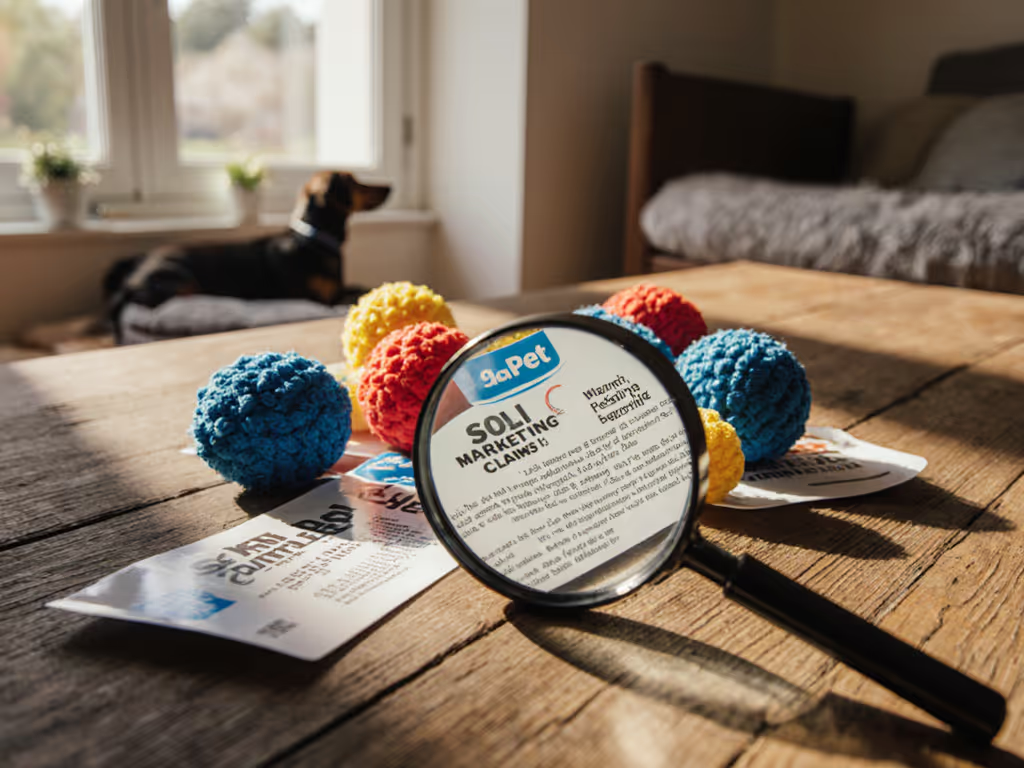
Navigating the world of dog toy labeling can feel like deciphering a foreign language, especially when your dog's safety and engagement depend on getting it right. As a shelter enrichment specialist who stress-tests toys in high-arousal environments before recommending them for home use, I've seen how misleading claims can lead to wasted money, frustrated pups, and even safety risks. This dog toy labeling guide cuts through the marketing noise to help you understand toy claims backed by real-world testing data rather than pretty packaging. Safety margins, not marketing, should be your north star when selecting toys that truly perform.
Why Dog Toy Labels Lack Standardization
Unlike children's toys, which must comply with the Consumer Product Safety Improvement Act (CPSIA) and ASTM F963 safety standards, dog toys operate in a regulatory gray zone. The Consumer Product Safety Commission confirms they don't regulate pet toys unless they pose a direct human hazard. This means terms like 'indestructible' or 'power chewer approved' carry no legal weight and aren't verified by third-party testing. For a plain-English breakdown of which toy safety certifications are legitimate and how to verify them, see our dedicated guide. My shelter team documents every failure mode we observe, from seam ruptures to stuffing leaks, precisely because these unregulated claims rarely align with actual performance in high-arousal testing. When a toy survives our enrichment rounds across multiple kennel cleans and play sessions, it earns our trust. When it fails predictably under stress, we flag it immediately.
What "BPA-Free" and "Phthalate-Free" Really Mean
Marketing claims about chemical safety require careful scrutiny. While "BPA-free" labels imply the manufacturer has tested for bisphenol-A (a chemical linked to health issues), there's no mandatory verification for dog toys. Unlike FDA-regulated pet food, toys made from plastic, rubber, or nylon fall outside federal safety oversight. In our testing facility, we categorize materials by material class and track how they degrade under different arousal band conditions — see our toy material safety guide for common failure modes. Our protocol requires verifying chemical safety through manufacturer documentation, not just trusting packaging claims. Request specific test reports from companies if chemical concerns are significant for your household, especially if you have young children or immunocompromised family members.
Decoding Durability Claims: Marketing vs. Reality
Terms like "indestructible," "tough chewer approved," or "heavy-duty" are classic examples of marketing claims decoded through shelter testing. During peak intake season, we document how toys perform across different jaw strengths and play styles, tracking exactly when and how they fail. What often gets labeled as "indestructible" might last mere minutes with a high-drive German Shepherd but survive weeks with a senior Shih Tzu. Our Playstyle Index rates toys based on time-to-failure benchmarks across multiple arousal levels, not just manufacturer promises. Look for brands that specify:
- Jaw strength required for the toy (e.g., "for dogs under 50 lbs")
- Expected lifespan under moderate vs. high engagement
- Specific failure mode data ("seams hold up to 45 lbs of pull force")
- Real shelter or foster testing verification
What Safety Information Should Legally Appear on Labels
While no federal law mandates safety labeling for dog toys, responsible manufacturers include critical information. If you shop internationally, our guide to global dog toy regulations explains how US, EU, and other standards differ. At minimum, you should see:
- Manufacturer's name and contact information
- Country of origin (required by the Fair Packaging and Labeling Act)
- Intended dog size range (though this is often inconsistent across brands)
- Basic safety warnings ("not for dogs under 6 months," "supervise during use")
Noticeably absent are third-party safety certifications, exact material composition, or standardized durability metrics. For packaging claims and eco-labels that actually matter, see our sustainable dog toy packaging guide. This is where our shelter testing protocol adds value, documenting the actual risk profile of each toy through systematic observation. When a toy passes our enrichment protocol across multiple high-arousal dogs without safety issues, we consider it verified for home use. Safety margins, not marketing, must guide your decisions.
How to Verify Enrichment Value Beyond "Fun"
Many labels claim "mentally stimulating" or "promotes natural behavior" with no supporting evidence. True enrichment dose requires measurable engagement metrics:
- Does the toy sustain interest beyond 15 minutes in moderate arousal?
- Does it require problem-solving beyond simple chewing?
- Does it adapt to different engagement levels (e.g., adjustable treat release)?
- Does it promote calm behavior post-play, indicating genuine mental fatigue?
In shelter environments, we track how toys impact canine stress markers and post-play behavior. Toys that deliver consistent enrichment value maintain engagement across multiple sessions without increasing anxiety or overstimulation, a crucial factor for apartment dwellers dealing with sound-sensitive neighbors. Look for brands that specify how their design supports specific behavioral outcomes rather than vague "fun" claims.
Red Flags That Signal Questionable Labeling Practices
Certain labeling practices should prompt verification before purchase:
"Safety margins, not marketing" should be your mantra when evaluating any toy claim that seems too good to be true.
- Absolute durability claims ("indestructible," "unbreakable") with no size limitations
- Vague material descriptions ("premium rubber" without specification)
- No safety warnings for appropriate dog sizes or ages
- "Made in USA" claims without country-of-origin labeling for components
- "Natural" labeling without ingredient transparency
When these red flags appear, cross-reference with independent testing data if available. Our shelter team maintains a public Playstyle Index documenting verified packaging terminology explained through actual performance metrics, not manufacturer promises.
Final Verdict: Building Your Verification Protocol
The hard truth? Honest toy labeling remains the exception rather than the norm in the dog toy industry. Your best verification strategy combines:
- Requesting documentation: Ask manufacturers for third-party test reports on chemical safety and durability
- Checking real-world verification: Look for brands that publish shelter or foster testing data
- Implementing your own assessment: Track how toys perform in your home environment across different arousal states
- Applying shelter-tested criteria: Note exactly when and how toys fail, such as seam integrity, stuffing exposure, structural collapse
In our facility, enrichment value isn't just about surviving the first play session, it is about maintaining engagement and safety through repeated use under stress. The toys that earn our recommendation do more than survive initial testing; they deliver consistent performance across multiple variables without compromising safety.
Your final takeaway? Safety margins, not marketing should determine your choices. When a toy's labeling aligns with verifiable performance data, not just appealing promises, you've found a product worthy of your trust and your dog's safety. Look beyond the packaging to the proof: does it survive stress and stay engaging? That's the only standard that matters. When a toy finally reaches end-of-life, dispose of it responsibly with our dog toy recycling guide.
Related Articles